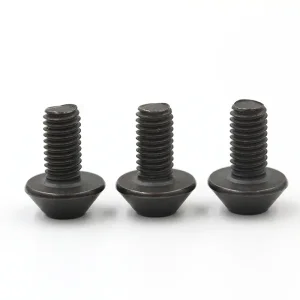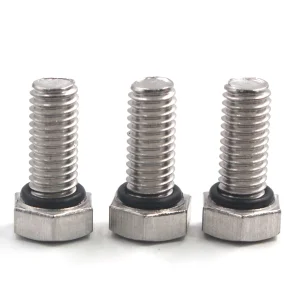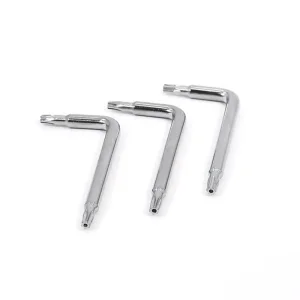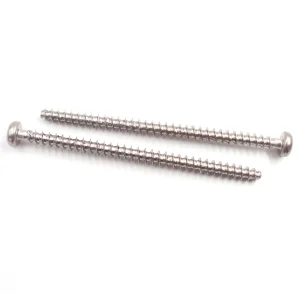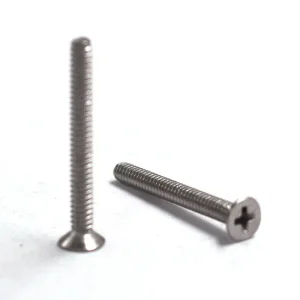
Engineered to seamlessly mate with our standard and customized L-shaped hex and Torx keys, ensuring exact dimensional engagement and zero cam-out risk in automated production lines.
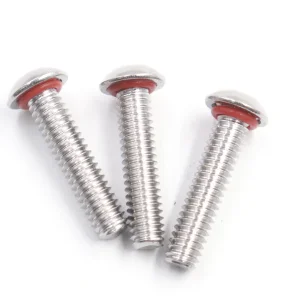
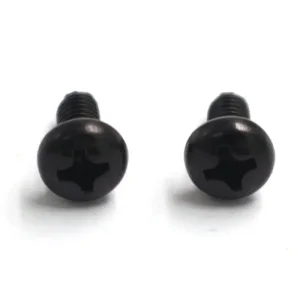
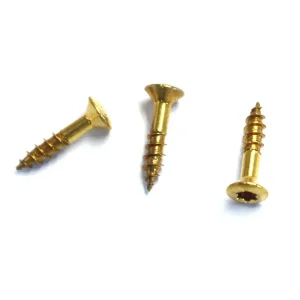
An authoritative engineering analysis of cold-drawn hexagonal tooling, ISO 2936 / DIN 911 dimensional thresholds, and the evolving manufacturing architecture of China's export corridors.
The ubiquitous L-shaped hex key wrench—commonly recognized as the Allen wrench, hexagonal key, or DIN 911 / ISO 2936 driver—remains an irreplaceable torque-transmission asset in precision mechanics, heavy industrial equipment, robotics, consumer electronics, and automotive assembly lines. Despite the rapid rise of automated robotic screw driving systems, manual serviceability, calibrated field maintenance, and compact fastener actuation within confined spatial envelopes mandate high-integrity manual L-keys.
In the contemporary industrial supply landscape, tier-1 procurement directors and mechanical design engineers face a structural paradigm shift. Sourcing is no longer a race to bottom-dollar pricing; rather, it hinges upon microstructural metallurgical consistency, tight across-flats (AF) geometric tolerances, uniform hardening depth without core brittleness, and comprehensive regulatory traceability (RoHS, REACH, conflict minerals, and IATF 16949 compliance). As a premier China L-shaped hex key wrench manufacturer and supplier with over three decades of operational history across our Dongguan, Shaoguan, and Wuhan facilities, Yu-Huang Electronics (YH Fastener) bridges the chasm between cost efficiency and aerospace-grade mechanical reliability.
Core Engineering Standard: According to DIN ISO 2936, the torsional breaking limit of a hardened metric hex key must withstand extreme elastic deformation without catastrophic ductile failure. YH Fastener keys consistently exceed ISO min-torque criteria by 18% to 27% due to controlled spheroidized annealing and controlled vacuum tempering.
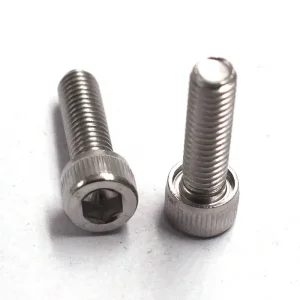
The global mechanical industry has witnessed heightened scrutiny regarding fastener-tool pairing. A micro-clearance mismatch between an internal socket cap screw and an L-wrench introduces stress concentrations at the socket apexes, yielding cam-out, stripped socket walls, damaged surface coatings, and catastrophic production downtime. By controlling both precision fastener production (machine screws, sealing screws, socket cap screws) and cold-forged L-keys under one integrated quality management architecture, we eliminate the systemic tolerance stack-up inherent in multi-vendor purchasing strategies.
Engineered across diverse global industries, tailored to regional operational stresses, ambient temperatures, and regulatory mandates.
High-voltage battery enclosure sealing, busbar interconnect fastening, and suspension link assembly. Demands anti-magnetic, non-sparking, or ESD-safe insulated keys where strict torque-to-yield tracking ensures zero foreign-object debris (FOD) during high-throughput electric vehicle manufacturing.
Miniature L-keys ranging from micro-sizes (0.7 mm, 0.9 mm, 1.27 mm, 1.5 mm) up to 2.5 mm for optical transceivers, telecom base-station heatsinks, and smartphone internal chassis mounts. Features zero-oil vacuum blackening and strict dustless packaging compatible with cleanroom ISO Class 6 environments.
Ball-end long-arm L-wrenches granting 25°–30° off-axis entry angles into high-density hydraulic manifolds, robotic articulation joints, and CNC tooling turrets. Forged from high-nickel alloy steel (8660 / S2 grade) resisting extreme cyclical impact fatigue without sudden fracture.
High-volume automated blister packing and polybagged hardware kits for flat-pack furniture manufacturers across North America and Europe. Precision zinc-plated or electrophoretic black coatings that pass 96h salt spray tests while optimizing bulk logistics container weight.
Balancing Rockwell hardness, ductile elasticity, and anti-corrosive passivation to withstand aggressive industrial duty cycles.
The performance envelope of an industrial L-shaped hex key wrench is governed by the tri-fold balance of material composition, cold-working deformation, and atmospheric heat treatment. Sourcing teams frequently encounter catastrophic tool failure caused either by excessive embrittlement (yielding abrupt shattering under sudden shock load) or inadequate core hardness (resulting in head rounding and premature slippage).
| Alloy Steel Grade | Nominal Composition | Standard Hardness (HRC) | Yield Torque Index | Primary Application Envelope |
|---|---|---|---|---|
| Cr-V (AISI 6150) | 0.50% C, 0.90% Cr, 0.18% V | HRC 50 – 54 | 100% (Baseline ISO 2936) | General maintenance, standard assembly lines, kitted consumer hardware |
| S2 Modified Tool Steel | 0.70% C, 0.50% Mn, 1.05% Si, 0.40% Mo, 0.20% V | HRC 58 – 62 | 135% – 150% | Heavy industrial torque, impact applications, automotive repair toolsets |
| SNCM+V (AISI 8660) | 0.60% C, 0.55% Ni, 0.50% Cr, 0.20% Mo, V trace | HRC 56 – 60 | 145% – 160% | Continuous production lines, high-frequency aerospace and robotics servicing |
| Austenitic 304 / 316 SS | 18Cr-8Ni / 16Cr-10Ni-2Mo | HRC 28 – 35 (Work-Hardened) | 80% – 90% | Food processing, marine, cleanroom, medical autoclaves (Zero rust contamination) |
To support next-generation assembly demands, YH Fastener has instituted advanced R&D protocols focusing on surface nano-engineering and ergonomic energy transfer:
Pioneering physical vapor deposition of DLC coatings providing surface hardness upwards of 2500 HV. This prevents microscopic micro-welding and metal transfer between stainless steel keys and medical-grade titanium fasteners, ensuring absolute cleanliness.
Laser-profiled edge chamfers that distribute point loads over wider contact areas on the flat walls of the hex socket rather than the delicate corners, boosting usable torque capacity by 20% and preserving fastener coatings across hundreds of cycles.
Integration of high-speed 360-degree optical cameras with deep learning edge detection, measuring arm angle perpendicularity, radius curve uniformity, ball-end neck concentricity, and dimensional cross-flat tolerances down to ±0.005 mm at 400 parts/min.
How our multi-site operational footprint mitigates geopolitical volatility, stabilizes raw material lead times, and guarantees continuous production uptime.
With central headquarters and manufacturing in Dongguan (Guangdong) supplemented by extensive automated satellite plants in Shaoguan and Wuhan, YH Fastener isolates procurement operations from single-location regional disruptions, power grid allocations, or regional logistics bottlenecks.
From raw alloy wire drawing, cold-heading, and chamfering to protective atmosphere continuous mesh-belt furnace heat treatment, precision barrel plating, and laser etching—every critical value-added operation resides entirely under our direct oversight, ensuring total accountability.
Long-term strategic partnerships with premier domestic steel mills guarantee predictable mill-certificate alloy chemistry (low sulfur and phosphorus content). Strategic warehousing of over 3,000 tons of wire rod stabilizes pricing schedules against global commodity market spikes.
Rigorous alignment with automotive, aerospace, and consumer environmental guidelines across the Americas, Europe, and Asia-Pacific.
Entering international supply chains requires demonstrable compliance verification. YH Fastener has invested heavily in state-of-the-art metrology rooms and international certifications to ensure our L-shaped hex keys, Torx keys, and paired precision screws pass all incoming cross-border audits smoothly:
Our manufacturing infrastructure is validated under IATF 16949. Production orders support full PPAP (Production Part Approval Process) Level 3 documentation, including DFMEA/PFMEA, Control Plans, Gage R&R, and 8D root-cause problem-solving frameworks.
All electroplating, anti-corrosion oils, and surface conversions are 100% hexavalent chromium-free (Cr6+ free). Full batch-level testing guarantees compliance with EU RoHS 2011/65/EU and REACH (EC) 1907/2006 SVHC substances of very high concern.
In response to the European Union Carbon Border Adjustment Mechanism (CBAM), our facilities are implementing closed-loop heat recovery in quenching furnaces and solar panel microgrids, providing certified carbon accounting per shipment.
Clear, technically detailed answers regarding tolerances, metallurgy, customization capabilities, and global dispatch logistics.
Standard DIN 911 (ISO 2936) sets baseline thresholds for short and long arm lengths, bend radii, and across-flats (AF) tolerance bands (generally h12 to h13 for commercial grades). However, for automated robotics or critical aerospace assemblies, YH Fastener manufactures custom OEM hex keys with narrowed h11 or h10 tolerance bands (±0.01 mm). Furthermore, we customize the bend angle (e.g., 100° obtuse angles for tight engine clearance), truncate arm lengths to clear internal bulkheads, or add detent balls, pilot guide pins, and knurled friction bodies according to customer 2D/3D CAD models.
Corner rounding is prevented through two primary vectors: metallurgy and geometry. We utilize S2 modified tool steel or 8660 nickel-chrome-molybdenum steel with vacuum furnace through-hardening (58–62 HRC) paired with sub-zero cryo-treatment to eliminate retained austenite. Geometrically, our high-precision cold dies apply calibrated corner relief chamfering, which transfers the drive contact force away from the vulnerable points of the socket onto the robust flat surfaces of the internal hexagon, maximizing torque transmission before slip.
While basic black oxide provides aesthetic appeal with minimal corrosion protection (approx. 24 hours neutral salt spray per ASTM B117), YH Fastener offers high-performance industrial coatings: Electrophoretic Deposition (EPD) providing 240+ hours, Zinc-Nickel alloy plating (12-15% Ni) yielding 720+ hours to red rust, hard satin chrome plating with high wear resistance, and Teflon/PTFE fluoropolymer barrier layers. For cleanroom and marine contexts, we recommend solid 304 or 316 austenitic stainless steel with nitric or citric acid passivation.
No. By mechanical design, the machined neck required to form the spherical ball profile reduces the cross-sectional core area of the wrench. As a result, ball-end tips typically provide 70% to 80% of the maximum yield torque of a square-cut hex tip. Ball ends are engineered specifically for rapid screw engagement at angles up to 25°–30° during pre-tightening. Final high-torque tightening or initial breakaway loosening should always be executed using the short, flat-cut arm of the L-wrench.
For catalog standard metric and imperial hex keys in standard finishes, MOQs start as low as 1,000 to 5,000 units depending on the size. For custom non-standard geometries, specialized laser branding, custom color-coded powder jackets, or unique kitted packaging, the typical MOQ is 10,000 units. Prototype tooling and PPAP sample submission are completed within 7 to 12 working days, followed by mass volume production cycles of 20 to 25 working days.
Unlike single-line tool factories or dedicated screw manufacturers who work in isolation, YH Fastener operates both cold-heading fastener workshops and hex/torx wrench lines under the same quality control team. We run direct dimensional cross-testing between the fastener's internal drive recess (gauged via GO/NOGO penetration pins) and the wrench’s across-flats profile, ensuring optimal engagement depth, zero wobble, and verified break-away torque safety margins.
Explore our complementary hardware lines—including high-tensile machine bolts, spring detent plungers, and specialized Torx keys engineered to complete your mechanical assembly bills of material.