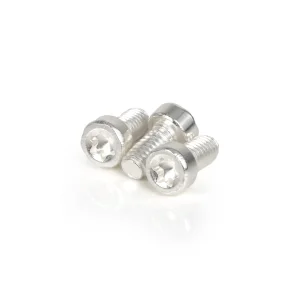
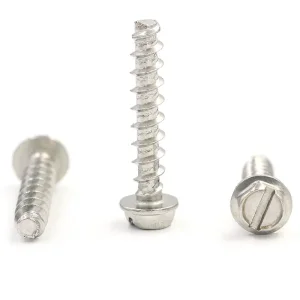
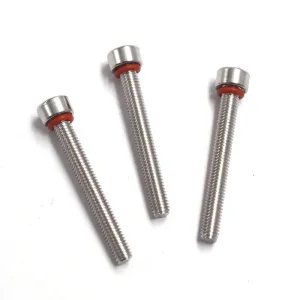
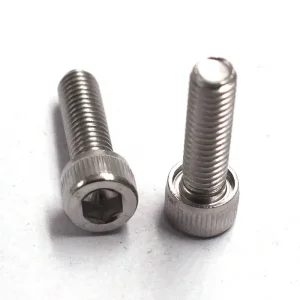
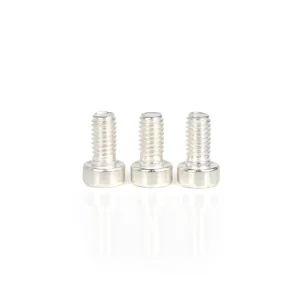
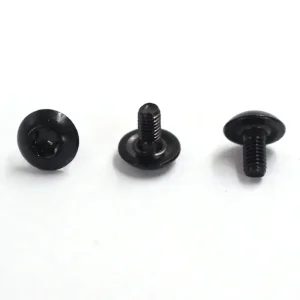
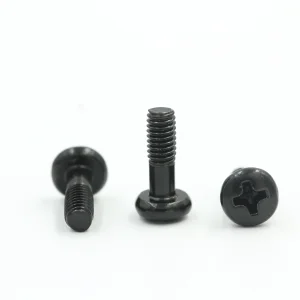
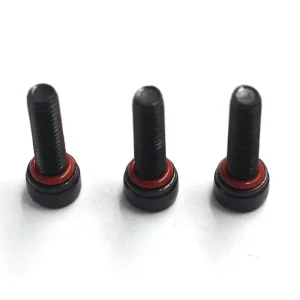
Continuous bowl feeding, magnetic pickup end-effectors, and pneumatic blow-feed guns demand zero micro-burrs and strict shank straightness. The configurations below illustrate our validated core automation products.
The worldwide transition from manual fastening to high-speed cobots, multi-spindle automatic screwdriving units (ASUs), and smart assembly cells has transformed mechanical screws into critical engineering components.
In traditional manufacturing, mechanical fasteners represented less than 2% of the total bill of materials (BOM) cost and were procured as bulk hardware commodities. However, with the hyper-acceleration of smart factories across North America, the European Union, Japan, and Southeast Asia, automated screw assembly cycles run at intervals between 0.8 and 1.8 seconds per cycle. In this environment, a fastener defect rate of 50 PPM (parts per million)—tolerable under manual assembly—translates directly to catastrophic line shutdowns, expensive automated screwdriver head blockages, and thousands of dollars in hourly downtime.
Modern automation assembly screws function as synchronized mechanical interfaces. Screws engineered for automation feature strictly controlled drive recesses (such as Torx Plus, deep Phillips, or internal hex sockets), micro-tapered lead-in thread points (Dog Point, Gimlet, or Ca-thread), and friction coefficient stabilization through precise wax lubrication. China has become the premier global manufacturing hub for these high-spec fasteners due to extensive investments in progressive multi-die cold heading machinery, laser visual sorting lines, and end-to-end metallurgical quality governance.
Automatic track alignment depends on head diameter-to-shank ratios and strict concentricity (T.I.R. within 0.02 mm). Flawless head undercuts eliminate wedging along pneumatic delivery tubes.
Automation drivers run up to 3,000 RPM. Torx Plus and engineered deep cross recesses distribute driving force along parallel sidewalls, eliminating vertical axial thrust ejection (cam-out) and debris shedding.
Digital DC electric nutrunners track torque-angle fastening curves. Standardizing the total friction coefficient (μtot = 0.10 - 0.15) via topcoat wax finishes guarantees consistent clamp preload without thread stripping.
From micro-fasteners in foldable mobile displays to high-voltage automotive battery packs, fastener engineering is defined by five transformative industry trends.
Traditional rolling glass plate sorting tables are being upgraded with multi-camera 360° telecentric lens arrays and convolutional neural networks (CNNs). Every screw is analyzed across 18 dimensional criteria, including thread pitch, flank angle, plating bridge burrs, and recess slot integrity at rates exceeding 800 parts per minute.
Lightweight multi-material vehicle architecture (bonding carbon fiber, extruded aluminum, and ultra-high-strength steel) requires screws that eliminate pre-drilling and punch pressing. Flow-drill screws (FDS) spin up to 6,000 RPM, plastically softening the sheet metal via friction before cleanly forming internal threads in one automated pass.
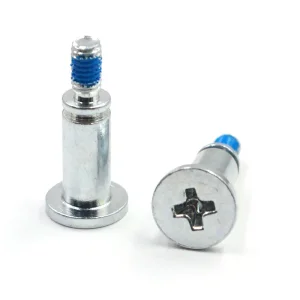
Applying liquid Loctite threadlockers on automated lines introduces nozzle clogs and volatile organic compound (VOC) emissions. Modern automated supply chains specify pre-applied micro-encapsulated chemical adhesives (e.g., DIN 267-27) or fused polyamide nylon patches (DIN 267-28), which activate solely under torque shear during automated driving.
The EU Carbon Border Adjustment Mechanism (CBAM) and Scope 3 greenhouse gas disclosures have transformed material sourcing. Chinese cold-heading mills are transitioning to electric arc furnace (EAF) low-carbon steel rods and eco-friendly trivalent passivation chemistry, accompanied by verifiable digital product passports (DPPs).
Automation assembly parameters vary fundamentally across target operational environments. Below is our comparative matrix across mission-critical manufacturing applications.
| Application Sector | Primary Joint Challenge | Optimal Drive / Head Geometry | Recommended Material & Metallurgy | Surface Treatment & Torque Protection |
|---|---|---|---|---|
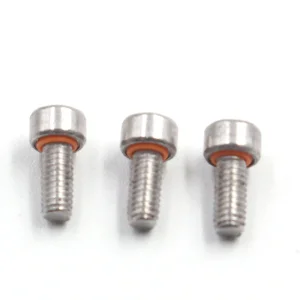
| New Energy EV Battery Packs | Thermal run-away sealing (IP68), thermal vibration, high electrical insulation needs. | Flanged Torx Socket Pan Head / Captive Sleeve Sems Screw | 304 / 316 Stainless or Class 10.9 Alloy Steel with low H2 risk | Multi-layer Zinc-Nickel (1,500 hrs NSS) + Under-head Fluorosilicone O-Ring |
| Micro Consumer Electronics (Smartphones/Laptops) | M0.8 - M1.6 micro space envelopes, risk of board-shattering micro-debris. | Torx Plus / Tamper-Resistant Pentalobe, Ultra-Thin Wafer Head | Austenitic Stainless (SUS304/SUS316L) or Low Carbon Hardened 1022A | Electrophoretic Deposition (EP-Black), De-magnetized to < 0.5 Gauss |
| Automotive Powertrain & Chassis Sub-Frames | High dynamic fatigue, alternating sheer stresses, corrosive road-salt splash. | Hex Head Flange with integrated serrations (DIN 6921 compliant) | SCM435 / 40Cr Alloy Steel Quenched & Tempered (Class 10.9 / 12.9) | Zinc Flake (Geomet / Dacromet), Total friction coefficient μ = 0.12 ± 0.02 |
| High-Speed Industrial Robotics & Cobots | Constant cyclic harmonic vibration causing threaded back-out. | Cylindrical Socket Head Cap Screw with Engineered Under-Head Radius | AISI 304 / 316 Stainless Steel with cold-rolled rolled threads | Pre-applied 360° Polyamide Locking Patch (prevents resonant back-off) |
| Outdoor Telecom & 5G Base Stations | Marine coastal salt spray, extreme UV exposure, dielectric galvanic corrosion. | Countersunk Phillips Flat Head or Tamper-Proof Pin-in-Torx | Marine Grade A4-80 Stainless Steel or Structural Grade Brass | Electrolytic Passivation + PTFE Anti-Galling Friction Reduction Layer |
To eliminate assembly stoppages on client lines worldwide, our Dongguan, Shaoguan, and Wuhan facilities follow a unified 5-stage ZDAP quality control system for every production batch.
Spectrographic spark testing and ultrasonic flaw inspection of incoming CHQ wire rod. Grain flow structure verified under 500x metallurgical microscopy.
Real-time tonnage monitor sensors on multi-station cold heading machines to stop punch runs instantly on 0.5% tool wear deflection.
100% optical laser profile analysis plus high-frequency eddy-current testing to detect sub-surface cracks and micro-voids prior to export packing.
The future of robotic assembly is transitioning from passive physical joints to smart, traceable, and self-monitoring mechanical nodes within digital twin architectures.
Implementing carbide cold-heading tooling and closed-loop CNC thread-rolling adjustments ensures standard shank diameter tolerances of ±0.015 mm and Cpk values > 1.67. This prevents jams in high-speed pneumatic blow-feed tubes and automated guide sleeves.
Laser-etching unique 2D micro-matrix codes on fastener heads down to M3 size. Automated camera drivers read the screw’s metallurgical batch, heat-treat hardness, and torque curve limits before engaging the drive bit, creating complete assembly traceability.
Integrating nano-scale thin-film piezoresistive sensor coatings under the fastener head flange. These coatings provide live preload clamp force data directly to factory IoT systems during automated tightening and monitor for vibration-induced loss of preload over the product's lifespan.
How leading tier-one manufacturers structure procurement, quality audits, and engineering partnerships with Chinese manufacturing facilities to minimize total cost of ownership.
Purchasing managers often focus narrowly on initial piece price (FOB cost). In automated assembly lines, piece price represents less than 15% of the total cost of fastening. The remaining 85% encompasses the costs of line stoppages, technician interventions to clear jammed feed tracks, scrapped components from stripped threads, warranty claims, and hydrogen embrittlement field failures.
Working directly with a fully integrated Chinese manufacturer operating cold-heading, heat-treatment, plating, and testing lines in-house—such as YH Fastener’s facilities in Dongguan, Shaoguan, and Wuhan—delivers significant engineering value:
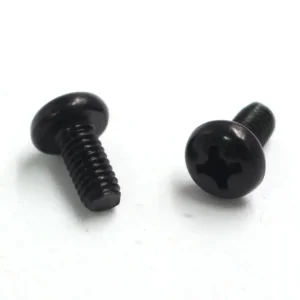
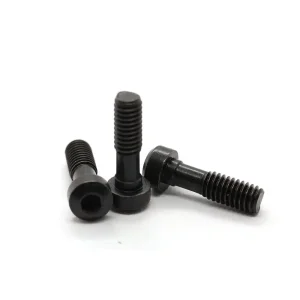
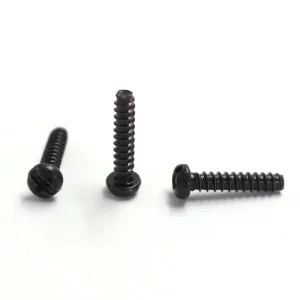
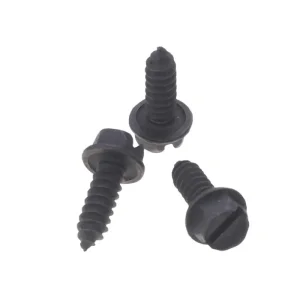
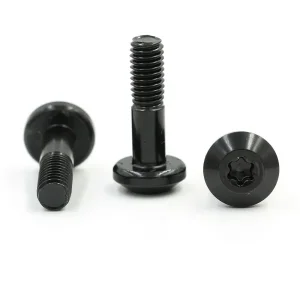
Specialty fasteners engineered for unique industrial assembly requirements—including hermetic sealing screws, shoulder pivots, captive panel fasteners, and thread-cutting screws.
Detailed technical answers addressing automated feeder tolerances, friction coefficient control, metallographic integrity, and global logistics governance.
