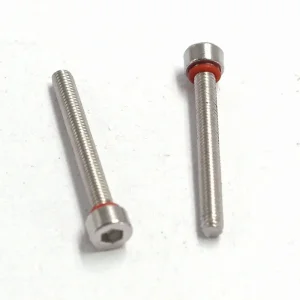
Review standard inventory and engineered fastening components produced with integrated under-head seals, bespoke metric threads, and certified surface treatments.
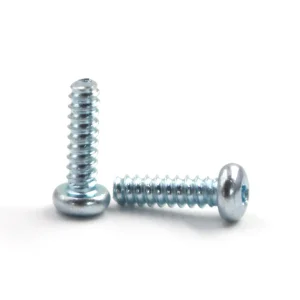
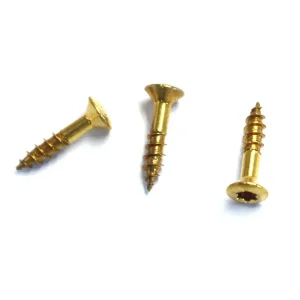
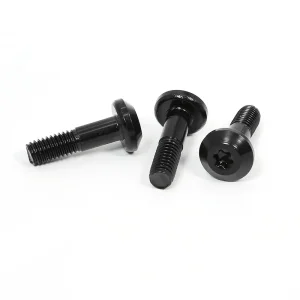
Dynamic analysis of supply chain evolution, material advances, and the transition toward hermetically sealed fastening systems.
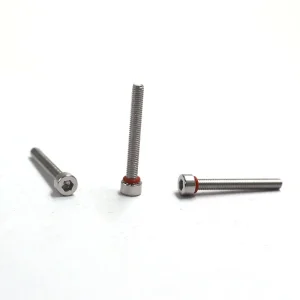
The acceleration of outdoor IoT nodes, distributed EV chargers, and edge computing enclosures has elevated sealing requirements from simple splash resistance (IP54) to high-pressure washdown and submersion performance (IP67, IP68, and IP69K). Screws with integrated elastomeric seals prevent capillary seepage without messy chemical sealants.
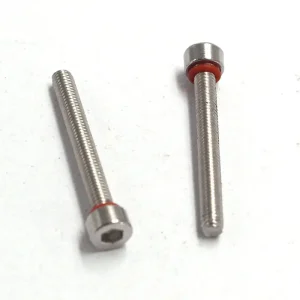
Battery packs (BESS), motor inverters, and on-board telemetry controllers face extreme dielectric risks if moisture penetrates. Sealing screws featuring fluorosilicone or EPDM O-rings nested in CNC under-head undercut grooves provide reliable 360-degree containment under continuous road harmonic vibration.
Traditional manual installation of separate flat washers, loose O-rings, and thread compounds causes high scrap rates and inconsistent clamping force. Pre-assembled sealing screws reduce factory cycle times by 30-45% while eliminating operator error on automated feeder lines.
How state-of-the-art cold heading, synthetic polymers, and automated optical metrology are shaping next-generation self-sealing fasteners.
The mechanical performance of a sealing screw depends heavily on its under-head groove geometry. Modern multi-die progressive heading machines form the undercut with controlled radius tolerances down to ±0.02mm, ensuring the elastomer displaces uniformly without squeezing out or shearing under full installation torque.
Suppliers are deploying bespoke fluorocarbon (FKM/Viton®), high-fluorine elastomers, medical-grade silicones (USP Class VI), and hydrogenated nitrile (HNBR). These compounds resist synthetic automotive lubricants, harsh clean-in-place (CIP) chemicals, and temperatures from -60°C to +260°C.
Automated assembly plants mandate zero-defect quality. Leading fastener manufacturers integrate high-resolution multi-camera vision sorting systems that check thread pitch, recess cleanliness, under-head undercut dimensional integrity, and O-ring concentricity at up to 800 parts per minute.
Engineered hardware deployed across high-reliability operating environments globally.
External junction boxes and string inverters endure decades of extreme UV exposure, rain, and cyclic thermal expansion. Pre-fitted silicone O-ring fasteners seal these housings against condensation and moisture ingress.
Handheld diagnostics, ultrasound transducers, and surgical enclosures need frequent sanitation. Passivated 316 stainless steel screws with peroxide-cured EPDM O-rings withstand harsh autoclave cycles and chemical wipes.
Battery enclosures require gas-tight isolation to contain thermal runaway events and shield sensitive management units from road wash. Sealing screws deliver secure mechanical clamping alongside airtight and fluid-tight sealing.
Submersible sensors, shipboard navigation antennas, and ROV assemblies demand saltwater corrosion resistance. A2-70, A4-80, and marine brass sealing screws block saline migration along the thread helix under hydrostatic pressure.
Reference guide for mechanical engineers, sourcing leads, and quality directors configuring sealing screw assemblies.
| Elastomer Material | Temperature Range | Key Chemical Resistances | Tensile / Rebound Profile | Target Industrial Segment |
|---|---|---|---|---|
| Buna-N (Nitrile / NBR) | -35°C to +110°C | Hydraulic oils, petroleum fluids, water, standard glycols | Exceptional compression set, strong tear resistance | General industrial machinery, fluid pumps, hydraulics |
| Fluorocarbon (Viton® / FKM) | -20°C to +205°C | Aggressive acids, synthetic lubricants, fuels, hydrocarbons | Superior thermal stability, high chemical durability | Automotive fuel rails, aerospace, petrochemical systems |
| Silicone (VMQ) | -60°C to +230°C | Ozone, weather aging, UV, animal fats, steam sterilization | Ultra-wide thermal resilience, lower abrasion resistance | Outdoor telecommunications, cleanroom medical devices |
| Ethylene Propylene (EPDM) | -45°C to +150°C | Phosphate ester fluids, hot water, brake fluid, polar solvents | Resistant to weathering, high electrical resistance | EV cooling circuits, outdoor enclosures, marine HVAC |
| Fluorosilicone (FVMQ) | -65°C to +175°C | Aviation fuels, hydrocarbon solvents, silicone oils | Wide thermal bandwidth paired with chemical barrier | Defense, aerospace avionics, cryo-instrumentation |
Using computational non-linear elastomer FEA to calculate precise groove fill ratios (70%-85%) to prevent elastomer extrusions, guaranteeing uniform radial sealing at specified clamping torques.
Adopting advanced carbide heading tool inserts with mirror-polished surfaces to eliminate micro-burrs along the seal retention groove, preserving O-ring surface integrity.
Deploying batch-level 2D DataMatrix head marking and digital material certs (MTRs) to provide complete material and manufacturing traceability across global OEM supply chains.
Comprehensive engineering clarifications covering manufacturing tolerances, O-ring compression mechanics, reusability, and quality compliance.
Blowout or shearing is avoided via a precision cold-formed or CNC-turned groove located under the screw head. The groove's volume is engineered to accept roughly 70-85% of the O-ring volume. When torqued, the metal head makes firm contact with the mating surface, clamping the O-ring securely inside the protective undercut rather than extruding it outward.
Yes. Because the O-ring resides within a controlled-volume groove, it avoids destructive over-compression during installation. Fasteners can typically be removed and re-torqued several times. However, for mission-critical subsea or aerospace assemblies, standard maintenance protocols recommend replacing the elastomer ring during overhauls.
Under-head surface smoothness is critical. Zinc nickel plating, passivation (for 304/316 stainless), or ultra-thin black oxide offer uniform coating layers without excessive thickness variations. An under-head surface roughness of Ra 0.4 to 0.8 μm ensures the elastomeric ring forms a reliable hermetic contact seal.
Our plants operate under ISO 9001, ISO 14001, and IATF 16949 automotive standards. Production batches feature lot traceability, optical automated dimensional sorting, and comprehensive documentation including PPAP Level 3 packages, 3.1 material certs, and salt-spray corrosion reports.
Explore our complete catalog of industrial hardware, including anti-tamper security bolts, high-torque machine fasteners, and custom mechanical components.