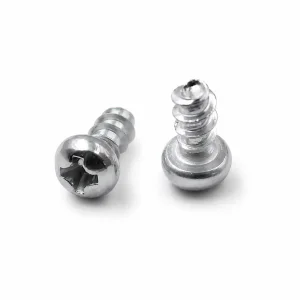
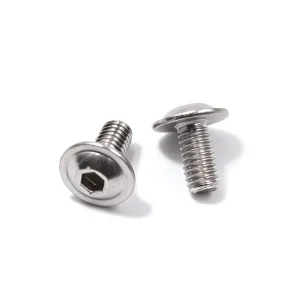
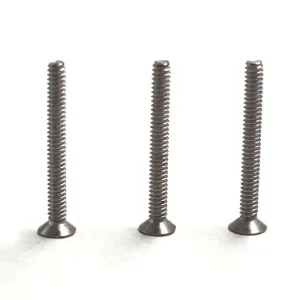
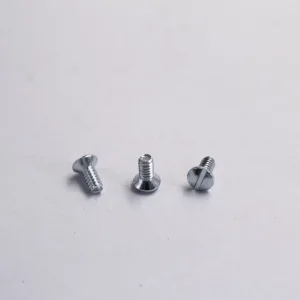
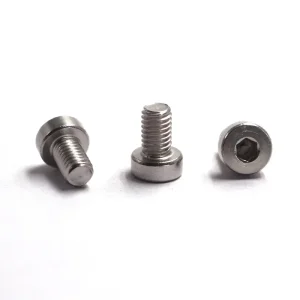
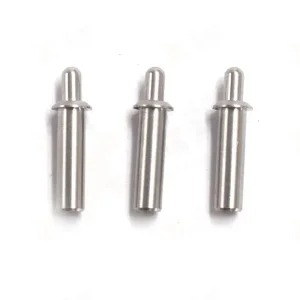
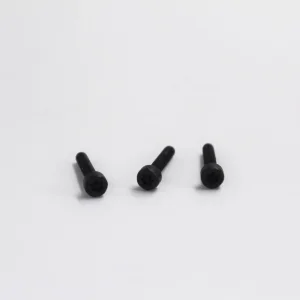
Every fastener in our portfolio is engineered from tested wire-rod alloys, fabricated on multi-die cold formers, and 100% verified for mission-critical joints.
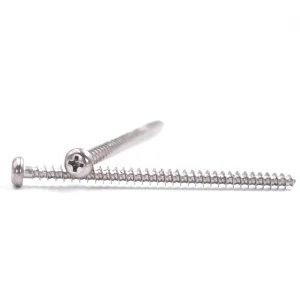
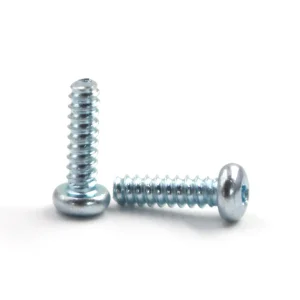
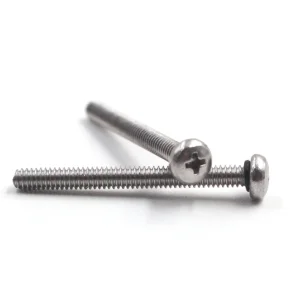
Transitioning from commodity components to custom-engineered mechanical joints that eliminate pre-tapping operations, optimize clamp loads, and reduce Total Cost of Assembly (TCA).
Traditional multi-piece mechanical joints require pre-drilled holes, dedicated thread-tapping stations, insert pressing, and separate locking washers. In automated high-volume production, each secondary operation introduces process variance, cycle time latency, and tooling wear.
Modern OEM custom self-tapping screws compress the assembly sequence into a single driving motion. By cutting or plastically forming mating female threads inside ductile metals or thermoplastics, manufacturing plants systematically remove tapping lubricants, chip evacuation, and thread-stripping hazards.
The global race toward decarbonization has accelerated the structural adoption of lightweight cast magnesium (AZ91D), high-strength extruded aluminum alloys (6000 & 7000 series), and continuous fiber-reinforced thermoplastics (PA66-GF30, PBT, PEEK).
Standard coarse machine screws fail in these substrates due to micro-cracking, notch sensitivity, and viscoelastic relaxation. Custom thread designs—such as asymmetric 30° flank angle PT® profiles and trilobular cross-sections—minimize radial hoop stress, allowing thinner wall bosses and reducing overall structural curb weight.
In tier-1 automotive assembly lines and automated cleanroom electronic cells, automated screwdrivers run at rotational speeds up to 2,500 RPM. Jammed fasteners or cross-threaded joints can shut down entire production shifts.
Global original equipment manufacturers require strict PPM thresholds (often ≤ 15 PPM). Custom self-tapping screws engineered with dog-point pilot tips, deep Torx (hexalobular) recesses, and strict length-to-diameter tolerances ensure seamless pneumatic and vacuum track feeding with zero operator intervention.
How our metallurgical research and precision thread-rolling tooling meet the thermal, mechanical, and sealing demands of next-generation hardware.
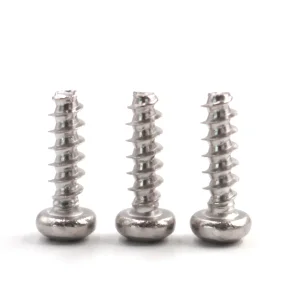
Traditional 60° thread flanks induce excessive radial bursting pressures inside plastic core holes. Our custom PT®-style fasteners utilize an optimized 30° flank angle with enlarged thread root valleys.
This allows optimal plastic flow during insertion, maximizes thread shear area, elevates stripping torque by up to 45%, and prevents environmental stress cracking (ESC) during long-term temperature cycling.
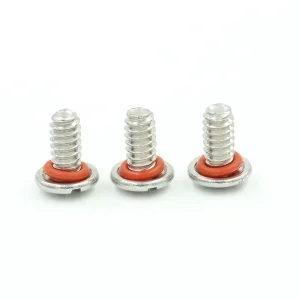
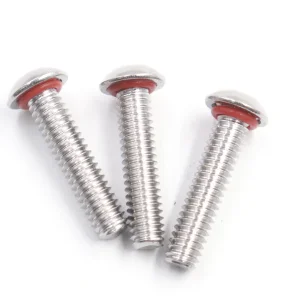
Electrification requires complete isolation against dielectric fluid leaks, high-pressure steam, road salt, and ambient humidity. We engineer cold-headed screws featuring undercut annular grooves fitted with precision silicone, EPDM, or Viton O-rings.
When tightened, the elastomeric element compresses into a controlled recess, achieving IP67/IP68 ingress protection without extruding beyond the outer head diameter.
Driven by miniaturized optical sensors, medical wearable implants, and ultra-thin mobile assemblies, our factory fabricates custom micro self-tapping screws ranging down to metric sizes M0.6, M0.8, and M1.2.
Maintaining pitch diameter consistency under ±0.015mm prevents fragile polymer brackets from splitting while sustaining high clamp loads under repeated drop-shock tests.
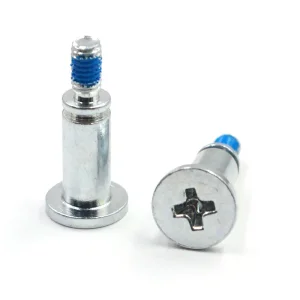
In environments subjected to continuous harmonic vibration, self-loosening is prevented by applying 360° or 180° micro-encapsulated chemical adhesives or resilient blue polyamide patches.
During drive-in, the microcapsules crush and polymerize, establishing an airtight prevailing locking torque that meets DIN 267-27 and DIN 267-28 automotive locking benchmarks.
Resolving galvanic corrosion, hydrogen embrittlement, and torque-tension scattering across complex industrial environments.
| Classification Parameter | Thread-Forming Screws (Plastics) | Thread-Rolling Screws (Ductile Metals) | Thread-Cutting Screws (Brittle Metals) |
|---|---|---|---|
| Displacement Physics | Zero-chip plastic displacement; material flows into wide root valleys | Chipless cold plastic deformation creating burnished grain flow | Mechanical chip cutting via milled flutes or notched cutting edges |
| Target Substrates | ABS, Polycarbonate (PC), PA66, POM, PBT, Polypropylene | Extruded Aluminum (6063-T6), Die-Cast Zinc, Cold-Rolled Steel | Cast Iron, Die-Cast Aluminum (ADC12), Thermosetting Phenolics |
| Drive Engagement | Torx (Hexalobular), Phillips Pan, Oval Countersunk | Torx Plus®, Hex Washer Head, Tamper-Proof Pin Recess | Slotted, Phillips, Hex Indented Flange |
| Tensile & Core Hardness | Core: HV 270–390; Surface: Carburized min. HV 450 | Case: HV 450–650; Core: HV 290–370 (Class 8.8 / 10.9 equivalent) | High Surface Hardness: HV 550–750; Core: HV 320–400 |
| Surface Protection | Trivalent Zinc (Cr3+), Black Nickel, Electroless Passivation | Zinc-Nickel Alloy (12-16% Ni) + Sealer, Geomet®, Dacromet® | Mechanical Zinc Plating, Phosphate & Oil, Yellow Chromate |
| Key Engineering Advantage | Prevents boss bursting; high resistance to pull-out loads | Superior fatigue resistance; high strip-to-drive torque ratio | Low driving torque in brittle substrates; eliminates blind tap steps |
Electroplated carbon and alloy steel screws with core hardness exceeding HRC 32 (HV 320) face severe risks of catastrophic delayed brittle failure triggered by atomic hydrogen diffusion.
Our ISO-certified manufacturing protocol strictly mandates thermal de-embrittlement baking at 200°C–220°C for 4 to 24 hours immediately post-electroplating and prior to passivation. Critical batches undergo sustained preload tension testing per ISO 15330 to verify zero hydrogen embrittlement failure.
When austenitic stainless steel self-tapping screws are inserted into aluminum or magnesium housings, the high electrochemical potential differential induces accelerated galvanic corrosion of the base structure.
We solve this with specialized multi-layer finishes: Zinc-Nickel electroplating (yielding over 1,500 hours neutral salt spray resistance per ASTM B117), inorganic fluoropolymer topcoats, and dielectric under-head polymer insulating washers that eliminate electrical contact between dissimilar metals.
For consistent robotic clamp load, the ratio between the thread-forming driving torque ($T_d$) and the ultimate thread stripping torque ($T_s$) must be kept wide ($T_s / T_d \ge 3.0$).
Through customized lead-in taper angles, precise lubricating waxes (e.g., Gleitmo), and tailored minor diameter tolerances, our engineering team assists clients in calibrating optimal pilot hole diameters to eliminate stripped joints while maximizing assembly speeds.
Real-world engineering challenges solved by custom self-tapping fasteners in mission-critical environments.
New energy battery pack top covers require continuous perimeter sealing across extensive extruded aluminum framing. Traditional tapped studs add weight and introduce swarf contamination hazards directly over high-voltage battery modules.
YH Fastener Solution: We supply stainless steel and carbon steel self-sealing tapping screws equipped with bonded fluorosilicone O-rings. The screws cold-roll the aluminum extrusion without generating conductive metal debris, meeting IP68 water ingress protection and resisting 10G mechanical vibration profiles.
Smartphone internal brackets, drone gimbal assemblies, and VR headsets require ultra-low-profile fasteners that can anchor into glass-filled polyamides and magnesium-lithium frames without distorting precision optical sensors.
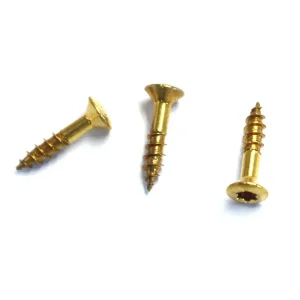
YH Fastener Solution: Micro-diameter countersunk Torx self-tapping screws (M0.8 to M1.4) crafted in 304 and 316 stainless steel with fine pitch threads. These parts feature black non-reflective trivalent coatings and tight head concentricity tolerances (≤ 0.05mm), preventing assembly misalignment in automated micro-robotic workstations.
Industrial power inverter housings, server racks, and servo controllers experience extreme thermal cycling (-40°C to +125°C), which degrades joint preloads via thermal expansion mismatch.
YH Fastener Solution: Case-hardened carbon steel trilobular thread-rolling screws finished with high-durability Dacromet coatings. The trilobular geometry ensures that the displaced mating metal plastically relieves hoop stress while providing high back-out prevailing torque that maintains clamp force throughout the equipment lifecycle.
From certified wire rod to optical sorting: how our 20,000 m² facilities maintain automotive-grade precision across millions of fasteners daily.
Incoming alloy wire (1018A, 1022A, SCM435, SUS304/316) undergoes metallurgical spectral verification, chemical descaling, and inline drawing to ensure uniform grain structure and strict diameter control (±0.005mm).
Multi-station cold headers form head styles (Pan, Flat Countersunk, Hex Indented) and drive recesses (Torx, Phillips, Tamper-Resistant) with uninterrupted grain boundaries, ensuring high shear and tensile strength.
High-precision carbide flat dies cold-roll the thread geometry. Cold deformation burnishes the thread root and flank surfaces, creating work-hardened threads with superior fatigue life compared to cut threads.
Continuous mesh-belt carburizing furnaces impart a hard, wear-resistant outer case for cutting/forming threads while preserving a ductile, shock-absorbing core that prevents brittle fracture under dynamic shear loads.
Automated barrel plating lines apply Cr3+ Zinc, Zinc-Nickel, or Passivation, followed by immediate de-embrittlement baking. Robotic secondary stations assemble elastomeric O-rings or dispense anti-loosening nylon locking patches.
High-speed glass turntable sorting machines inspect 100% of the production run for head dimensions, thread pitch, flank angles, drive recess depth, and total runout, systematically eliminating defective fasteners before packaging.
Operating under the registered corporate brand Yu-Huang Electronics Dongguan Co., Ltd., we combine three decades of cold-forming mastery with rigorous multi-tier quality management systems.
With major production and tooling sites located across Dongguan (Headquarters), Shaoguan, and Wuhan, our infrastructure spans over 20,000 square meters. This multi-site network guarantees dual-sourcing reliability, localized material logistics, and business continuity for large-scale international OEM programs.
Automotive supply chains demand total process traceability. Our laboratories feature advanced test equipment including Fischerscope X-ray plating thickness analyzers, Vickers microhardness indenters, optical profile projectors, digital torsional drive testing stands, and automated salt-spray chambers. Full PPAP Level 3 documentation, IMDS submissions, and material mill test certificates (MTCs) accompany our shipments.
We work directly with your mechanical design teams during early prototype stages. Our application engineers provide Design for Manufacturability (DFM) analysis—evaluating draft angles, hole sizing calculations, insertion torque expectations, and material galvanic compatibility to prevent costly tooling iterations before tool cut.
In-depth technical answers addressing fastener calculations, tool life, hydrogen embrittlement validation, and custom lead times.
Calculating the optimal core hole diameter ($d_h$) depends on the flexural modulus and ductility of the target polymer. For our proprietary PT® 30° flank thread-forming screws, the standard baseline calculation is approximately: $d_h \approx 0.80 \times d$ for ductile materials like ABS, Polypropylene, and unfilled Polycarbonate, and up to $0.85 \times d$ for rigid, filled polymers such as PA66-GF30 or PPS. If the pilot hole is too small, radial hoop stress will cause boss cracking; if too large, thread engagement depth drops, reducing pull-out resistance. Our application engineering team provides custom hole diameter recommendations and testing based on your specific resin grade and mold draft angles.
Thread-forming screws plastically displace and compress the host material without cutting or generating chips. In ductile metals (such as aluminum and zinc) and ductile thermoplastics, this work-hardens or aligns the internal grain structure of the tapped hole, providing higher resistance to vibrational loosening and stripping. Thread-cutting screws, by contrast, feature cutting flutes or edges that physically remove chips of material. They are selected for brittle substrates such as thermosetting plastics, thick cast iron, or die-cast aluminum (e.g., ADC12) where plastic displacement would generate excessive driving torque or fracture the part.
Hydrogen embrittlement is a serious concern for case-hardened screws and fasteners with core hardness exceeding 320 HV (approx. 32 HRC). During pickling and electroplating, atomic hydrogen can diffuse into the steel's crystal lattice. Under tensile clamp loads, this hydrogen migrates to stress concentration zones, causing sudden catastrophic fracture. We eliminate this through: (1) using inhibited acid pickling to minimize hydrogen exposure, (2) transferring fasteners into convection de-embrittlement ovens within one hour of plating, baking at 200°C–220°C for 4 to 24 hours depending on strength class, and (3) routinely conducting destructive ISO 15330 wedge tensile preload tests for 48 hours to confirm zero embrittlement before releasing the lot.
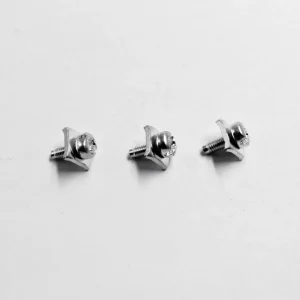
Yes. Over 65% of our production output consists of non-standard, custom-engineered components tailored to customer CAD files (STEP, IGES, DXF, DWG). Our in-house tooling center produces dedicated cold-heading punches, transfer fingers, and thread-rolling dies for custom pan heads, low-profile wafers, undercut sealing grooves, security tamper-proof pins (Torx with pin, triangular, five-lobe), captive shoulders, and SEMS pre-assembled washer configurations. We verify custom tooling feasibility and issue formal DFM reports within 24 hours.
As an IATF 16949 and ISO 9001 certified manufacturer, every shipment leaves our docks with full traceability back to the raw material wire-rod heat number. We regularly provide EN 10204 3.1 material test certificates (chemical analysis and physical tensile properties), dimensional FAI (First Article Inspection) reports, plating thickness measurements via XRF, salt-spray chamber test records, RoHS and REACH compliance declarations, and full automotive PPAP Level 3 documentation packages (Control Plans, FMEA, Gage R&R, and IMDS registration) upon project kick-off.
For custom cold-formed self-tapping screws requiring new heading and thread-rolling tooling, prototype samples are delivered within 10 to 15 business days. Once tooling is validated and PPAP approved, mass production orders ship within 3 to 4 weeks. With more than 300 automated heading, rolling, and sorting machines running across our three plants, our monthly output exceeds 150 million precision fasteners. Minimum Order Quantities (MOQs) typically range from 20,000 to 50,000 pieces depending on part size and wire alloy, with safety stock agreements available for recurring blanket POs.
Engineered hardware complementing our self-tapping lines for comprehensive structural, positioning, and panel-mounting requirements.