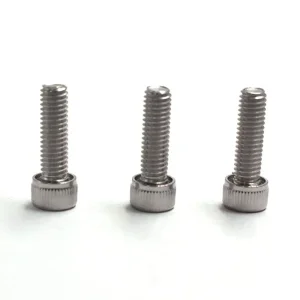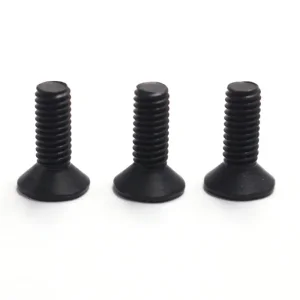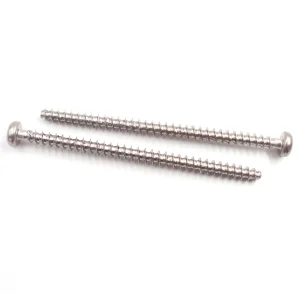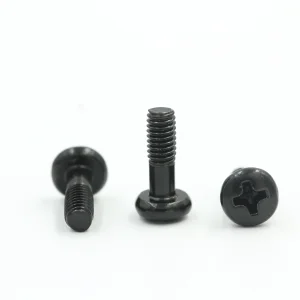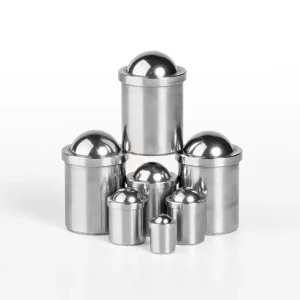
High-performance production items cold-formed and thread-rolled across our certified manufacturing lines in Dongguan, Shaoguan, and Wuhan.
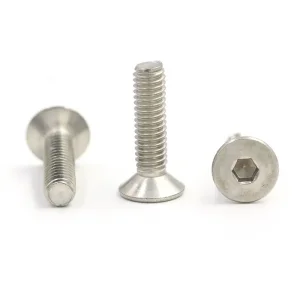
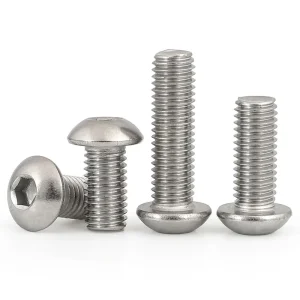
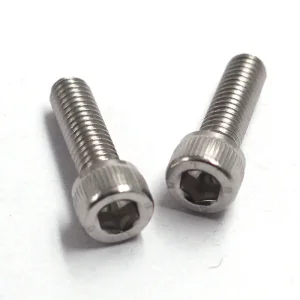
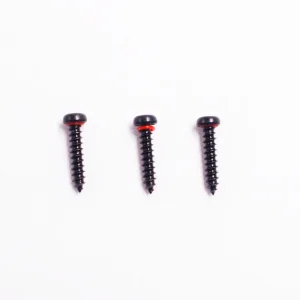
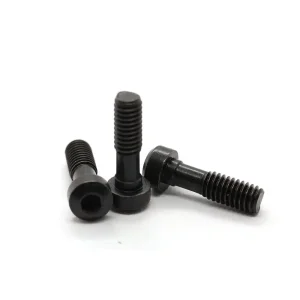
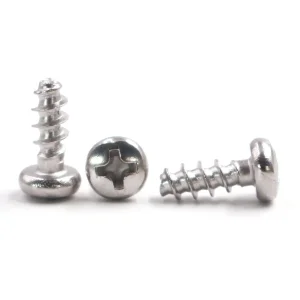
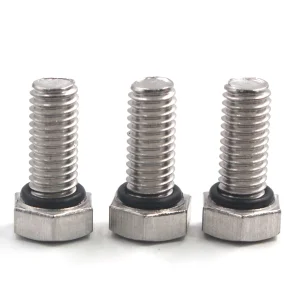
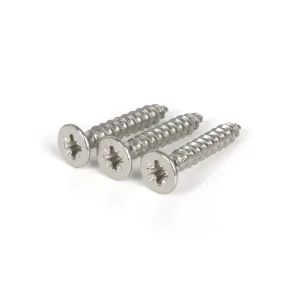
Flat-head countersunk self-tapping fasteners represent one of the most mechanically demanding micro-fastener categories in global assembly engineering. By combining flush-surface packaging with self-contained internal thread forming, these components eliminate secondary tapping, weld nuts, and thread inserts across metal sheets, die-cast alloys, and engineering plastics.
Flat-head profiles—typically manufactured to 90° (DIN/ISO metric standards), 82° (ASME inch standards), or 100° (aerospace & low-thickness chassis specs)—rely entirely on precise angular concentricity. Any deviation between the countersunk mating hole and fastener head induces bending stress in the shank, leading to premature fatigue under dynamic shear loading.
Self-tapping stainless fasteners operate through two primary physical modes: thread forming (chipless cold deformation of ductile receiving materials) and thread cutting (fluted relief geometries that mill mating threads into brittle die castings). Chipless thread-forming creates work-hardened internal threads with uninterrupted grain flow, boosting stripped-thread resistance by up to 28%.
Standard 300-series austenitic stainless steels (304 / A2-70, 316 / A4-80) cannot be through-hardened via conventional quench-and-temper metallurgy. Achieving sufficient thread tip hardness to tap structural sheet metal requires controlled multi-pass cold-heading and rolling deformation, or proprietary surface case hardening (such as low-temperature Kolsterising® diffusion), preventing galling while retaining corrosion resistance.
China’s Pearl River Delta and Yangtze River fastener corridors have evolved from high-volume standardized output into specialized micro-engineering hubs. At YH Fastener’s 20,000 m² multi-plant network, integrated wire conversion, high-speed multi-station forming, and optical inspection create an insurmountable cost-to-precision ratio.
Direct mill allocations of certified 304, 304L, 316, and 410 stainless wire coils (sourced from Baosteel and Yongxing Special Steel) ensure verifiable chemistry, controlled grain size (ASTM 7 or finer), and trace copper additions that improve cold plastic deformation during head upsets.
Equipped with 4-die 4-blow and 5-die 5-blow cold forming machinery capable of cycling at 180–350 parts per minute. Progressive forming shapes intricate countersunk recesses (Torx, Phillips, Pozidriv, Hex-Lobe) with zero recess flash and grain paths uninterrupted by shear lines.
Tungsten carbide punch tooling fabricated in-house utilizing ultra-precision slow-walk wire EDM and CNC grinding. Rapid tooling turnaround allows standard DIN 7982 or customized low-angle countersunk prototypes to transition from CAD approval to physical PPAP samples in under 7 business days.
High-speed multi-camera optical sorters inspect head diameter, countersink angle, drive depth, thread flank integrity, and total runout. Automated eddy-current sorters verify material alloy mix-ups, guaranteeing defect rates below 10 PPM for automated assembly lines.
Engineering teams must balance driving torque, clamp load generation, countersink clearance, and electrolytic compatibility. The following table provides direct engineering benchmarks for high-volume procurement.
| Parameter / Standard | DIN 7982 / ISO 7050 (Metric) | ASME B18.6.4 (Inch) | JIS B 1122 (Japanese Metric) | Proprietary Delta PT / High-Plast |
|---|---|---|---|---|
| Countersink Head Angle | 90° (Standard European Metric) | 82° (Standard North American) | 90° / 100° (Compact Electronics) | 90° or 100° Undercut Head |
| Drive Recess Options | Phillips (Type H), Pozidriv (Type Z), Torx | Phillips (Type I), Slotted, Square (Robertson) | Cross Recess Type 1, Torx Plus | Torx Plus / Hexalobular Security |
| Thread Profile | Type C (Gimlet Point) / Type F (Blunt) | Type AB (Fine Pitch) / Type A (Coarse) | Type 1, Type 2, Type 4 Point | 30° Flank Angle (Low Radial Expansion) |
| Core Material Options | A2-70 (AISI 304), A4-80 (AISI 316) | 18-8 Stainless, 316 Stainless, 410 Martensitic | SUS304, SUS316, SUS410 | A2 / A4 Cold-Work Hardened Wire |
| Surface Hardness Strategy | Work-hardened rolled threads (HV 350-450) | Passivated / Optional Kolsterised® (HV 900) | Cold-headed work hardening | Work-hardened thread crests |
| Target Substrates | Alloy sheet metal, thin structural brackets | Stamped chassis, electrical cabinets | Consumer devices, optics, instrumentation | ABS, PC, PBT, Polyamide with Glass |
Modern assembly requirements demand that fasteners provide structural clamp load without creating snag points, interfering with adjacent PCB components, or degrading in corrosive environments.
In ultra-thin laptops, smartphones, drone gimbals, and wearable health trackers, internal space is measured in fractions of a millimeter. Flat-head micro self-tapping screws (M1.2–M2.5) sit completely flush with inner chassis magnesium-aluminum frames, avoiding battery puncturing or display panel interference.
Electric vehicle battery management system (BMS) covers, radar housings, and charging port interfaces require continuous sealing against water and salt spray. Flat-head self-tapping screws with pre-applied under-head elastomeric coatings or fluoropolymer patch rings provide airtight, flush perimeter clamping.
Solar micro-inverters, wind turbine control nodes, and outdoor LED architectural displays face decades of UV radiation, thermal expansion cycles, and atmospheric moisture. Marine-grade 316 stainless flat-head self-tapping screws eliminate rust streaks while maintaining structural clamping of outdoor covers.
Using stainless steel self-tapping fasteners in automated environments introduces specific failure modes: thread galling, drive recess stripping, galvanic potential mismatch, and misalignment during automatic blow feeding. YH Fastener provides engineered countermeasures.
Austenitic stainless steels develop a spontaneous oxide film that can seize under localized frictional heat during high-speed self-tapping (a phenomenon known as cold welding or galling). We resolve this by applying micro-encapsulated dry-film waxes, PTFE topcoats, or anti-friction organo-metallic coatings.
When stainless steel flat-head fasteners are driven into aluminum or galvanized steel chassis in the presence of an electrolyte, the large cathode-to-anode area ratio can rapidly degrade the surrounding host metal. We supply specialized non-conductive barrier coatings and passivated conversion finishes.
Countersunk flat heads present feeding challenges in automated screw dispensers due to their tapered under-head profile, which can cause parts to shingle or jam inside pneumatic feed tubes. Our engineering team optimizes shank-to-head transition ratios and lead chamfers specifically for magnetic and vacuum robotic pick-and-place spindles.
Tier-1 automotive, telecom, and medical corporations evaluate fastener suppliers beyond simple unit pricing. Mitigating global supply chain risk requires robust compliance certifications, verifiable material pedigree, and dependable delivery structures.
Manufacturing plants operate under unified ISO 9001, ISO 14001, and IATF 16949 quality management systems. Every manufacturing lot follows rigid Process Failure Mode and Effects Analysis (PFMEA) and Production Part Approval Process (PPAP Level 3) workflows.
From raw wire coil rod through cold heading, threading, passivation, and automated packaging, every batch is tied to an internal barcode lot number. Mill chemical test reports (EN 10204 Type 3.1) accompany all shipments.
Fasteners comply strictly with EU RoHS Directive 2011/65/EU and REACH (EC 1907/2006) SVHC substance limits. All raw materials are verified conflict-free, ensuring unrestricted compliance for worldwide commercial export.
Supporting Vendor-Managed Inventory (VMI), Kanban release scheduling, and safety-stock warehousing in North America and Western Europe. Flexible sea, air, and multimodal rail solutions ensure uninterrupted assembly operations.
Key technical answers for engineering design teams, quality assurance auditors, and strategic supply chain managers evaluating China fastener manufacturers.
While all three specifications cover countersunk flat-head self-tapping fasteners, their geometric tolerances and countersink angles differ significantly:
Because austenitic stainless steels (304 / 316) cannot be hardened by standard thermal quenching, their surface hardness is primarily derived from cold working during thread rolling (typically achieving HV 350 to HV 450).
Galling occurs when friction removes the passive chromium oxide layer, causing microscopic contact points to fuse. YH Fastener addresses this through three proven engineering approaches:
Every production lot undergoes rigorous laboratory testing prior to export release. Standard documentation packs include:
For standard DIN 7982 / ISO 7050 catalog items in common thread sizes (M2 to M6), standard factory inventory can dispatch within 3 to 5 business days. For custom head designs, non-standard lengths, special drive recesses, or customized thread profiles, our lead-time parameters are:
Explore additional standard and custom fastener solutions engineered for electronic enclosures, thermoplastic housings, and heavy industrial equipment.