
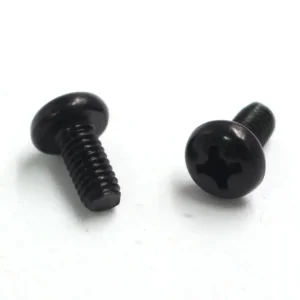
Factory-direct pre-assembled SEMS, vibration-dampening, and captive solutions tailored for zero-downtime pick-and-place automated robotic systems.
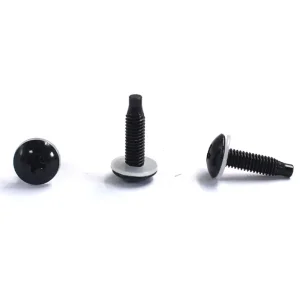
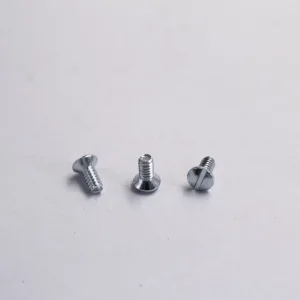
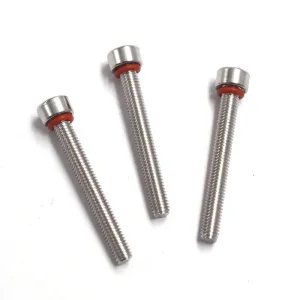
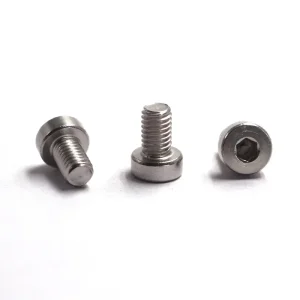
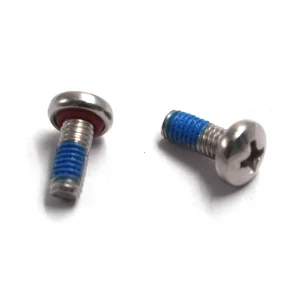
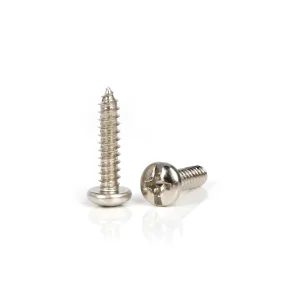
In modern industrial robotics, collaborative automation (Cobots), and micro-electronics assembly, mechanical fastening accounts for over 60% of automated line mechanical stoppages when utilizing disparate fasteners. Traditional assembly configurations that separate independent machine screws from loose helical spring or flat washers introduce geometric variability, handling friction, and feeder bowl jams. As robotic end-effectors, vacuum pick-and-place nozzles, and automated blow-feed screwdriving systems accelerate toward sub-second takt times, the global market has irreversibly shifted toward pre-assembled Robot SEMS Screws.
A SEMS screw integrates one, two, or multiple free-spinning, permanent captive washers under the cold-formed screw head prior to the thread rolling process. Because the major outer diameter (OD) of the rolled thread is fundamentally larger than the inner hole diameter of the washer, the washer is permanently retained without risking detachment. Within high-vibration kinematic joints, delta robotic arms, SCARA units, and automated guided vehicles (AGVs), SEMS screws provide mathematically consistent clamp force retention, elimination of human assembly oversight, and a dramatically reduced Bill of Materials (BOM) complexity.
In autonomous robotic articulated joints, thermal fluctuations from servo drives interact with multi-axial dynamic torque. Using plain washers creates micro-fretting corrosion and clamp load relaxation. Captive conical Belleville, internal tooth, or wave washer SEMS configurations maintain dynamic elastic tension (preload), mitigating cyclical fatigue failure across millions of motion cycles.
| Evaluation Parameter | Traditional Discrete Fasteners | China Automated Robot SEMS | Operational Impact |
|---|---|---|---|
| Automatic Feeder Jam Rate | 120 - 350 per 100,000 cycles | < 5 per 100,000 cycles | Eliminates nozzle misfeeds and robotic cell downtime |
| Secondary Inspection Labor | Requires optical check for missing washers | Zero: Washer presence verified at rolling | Decreases overall assembly labor expenses by 38% |
| Preload Clamp Consistency | ±22% (Friction coefficient scatter) | ±6% (Uniform factory lubrication/coatings) | Prevents stripped gearboxes and loose joint enclosures |
| Inventory SKU Management | 2 to 3 discrete part numbers per joint | 1 single consolidated SEMS SKU | Simplifies enterprise ERP and procurement flows |
How our multi-station cold-heading, high-speed automated washer feeding, and vertical supply ecosystem drive unparalleled technical precision and volume scaling.
Continuous progressive dies ensure an uninterrupted metallic grain flow along the head-to-shank fillet, yielding tensile yields superior to cut-machined robotics fasteners.
Automated orbital sorting lines seat washers onto blanks at speeds over 600 pieces per minute prior to in-line circular thread rolling, eliminating loose washer tolerance defects.
Operating across Dongguan, Shaoguan, and Wuhan, we capture direct raw alloy steel sourcing, dedicated eco-plating, and hydrogen embrittlement relief within hours.
Multi-camera CCD laser inspection systems check thread pitch, washer play, shank straightness, and drive recess integrity with sub-millimeter PPM precision.
From precision joint articulation to heavy industrial battery modules, discover where specialized SEMS configurations deliver decisive mechanical advantages.
Harmonic drives and cycloidal speed reducers in 6-axis industrial robots suffer high torsional resonance. Custom Pan Head SEMS featuring high-tensile alloy steel with captive conical spring washers exert continuous spring-back clamping force, counteracting torque relaxation during emergency high-inertia braking.
Lightweight aluminum end-effectors require frequent retooling without thread stripping. SEMS screws combined with integrated wide-diameter flat brass or polymer washers distribute surface bearing stress evenly, preventing galling and surface deformation on lightweight structural anodized plates.
Floor surface irregularities generate ongoing random vibration inputs to AMR drivetrains. Double-washer SEMS screws (split helical spring washer combined with flat ground washer) provide dual benefits: positive anti-backout locking coupled with load distribution across structural subframes.
Robotic pick-and-place screwdriving heads require high magnetic suction stability or vacuum pickup. Phillips/Torx drive machine screws with tightly dimensioned pilot tips guide the fastener self-centering into deep blind tapped channels without thread crossover.
How international supply chains navigate the twin pressures of robotic miniaturization, sustainability compliance, and total cost of ownership (TCO).
1. Demands for High-Efficiency Cleanroom Assembly (Zero Particulate Shedding): Modern semiconductor robotics and medical automation require fastener surfaces that generate virtually zero micro-debris during high-speed torque-down. Standard electro-galvanized plating can flake micro-particulates into cleanrooms. Sourcing criteria are prioritizing vacuum-passivated 304/316 stainless steel or advanced thin-film fluoropolymer and trivalent zinc-nickel finishes that withstand over 1,000 hours of neutral salt spray (ASTM B117) without surface degradation.
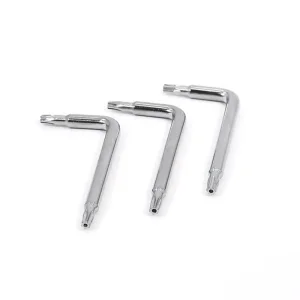
2. Drive Recess Evolution: The Rise of Torx-Plus and Six-Lobe Drives: As automated pneumatic and electric screwdrivers ramp up spindle speeds to 2,000 RPM, traditional Phillips recesses exhibit excessive cam-out forces, wearing driver bits and generating metallic contamination. Procurement contracts are shifting rapidly toward Torx, Torx-Plus, and tamper-resistant drive geometries. These recesses provide a true 0° drive angle, completely removing radial push-out forces and vastly extending bit tooling life in robot arms.
3. Deep Supply Chain Resiliency & Stringent PPAP Documentation: Global Tier-1 automotive and robotics OEMs require complete material traceability under IATF 16949 standards. Sourcing directly from verified Chinese manufacturers with integrated wire spheroidizing, cold heading, heat treatment, optical sorting, and in-house laboratory testing eliminates intermediate markups while ensuring full Level 3 PPAP (Production Part Approval Process), IMDS declarations, and RoHS/REACH certificates.
Authoritative answers on SEMS fastener mechanics, automated feeder compatibility, and OEM custom production protocols.
A SEMS screw is produced by slipping a pre-stamped washer onto an unthreaded cold-headed screw blank before the threads are rolled. The roll-forming process expands the shank's outer diameter past the internal clearance of the washer, permanently locking the washer in place while permitting free rotational clearance. In automated robotics assembly, this eliminates manual or robotic washer pickup, eliminates lost components inside delicate enclosures, and ensures 100% washer compliance on every structural joint.
Traditional loose washers frequently overlap, wedge into bowl tracks, or fail under magnetic orientation. SEMS screws provide an integral, balanced center of gravity. Our robotic SEMS screws feature strictly controlled washer concentricity tolerances (within 0.02mm) and optimized washer outer diameter to head diameter ratios. This prevents the washer from catching on guide rails, feed tubes, or automated driver jaws during high-velocity pneumatic delivery.
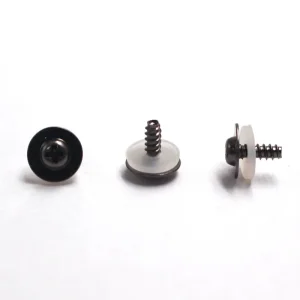
We manufacture custom configurations including: Single Flat Washer (narrow, regular, or wide OD); Split Helical Spring Washer; Double Washer (Spring + Flat Washer combo); Internal/External Tooth Lock Washer (for electrical grounding and anti-rotation); Conical Belleville Washer (for thermal expansion joint compensation); and Non-Metallic Washers (Nylon, Teflon, EPDM for environmental sealing or electrical isolation).
Our plants operate under strict ISO 9001, ISO 14001, and IATF 16949 automotive quality management certifications. Every production lot undergoes spectrometer raw-material validation, optical sensor dimensional measurement, micro-Vickers hardness verification, torque destruction testing, plating thickness X-ray fluorescence, and ASTM B117 salt spray environmental validation.
We provide full engineering drawing reviews, DFM (Design for Manufacturability) feasibility feedback, and comprehensive quotations within 24 hours. Prototype tooling and sample production are typically completed in 7 to 10 days, accompanied by complete dimensional inspection records and material mill test certificates.
Explore additional precision hardware, engineered sealing screws, high-torque hex solutions, and captive assemblies for industrial equipment.
Upload your 2D engineering drawings (PDF, DWG) or 3D STEP models. Receive detailed DFM feedback, tolerance validation, and Tier-1 factory direct volume pricing within 24 hours.