+86 131 7840 7856 WhatsApp Dongguan · Shaoguan · Wuhan, China

Who Are the Top Specialty Fasteners Manufacturers in China?

Time:2026-10-29 Author:Liam
0%

China’s specialty-fastener sector serves demanding applications in automotive, aerospace, energy, construction, and industrial machinery. Choosing a manufacturer takes more than comparing prices or catalog sizes. Buyers need to examine material control, dimensional consistency, testing capability, and traceability from raw stock to finished part.

The wider market shows why supplier scrutiny matters. Grand View Research estimated the global industrial fasteners market at about US$90.6 billion in 2023 and forecast a 4.5% compound annual growth rate through 2030. This figure covers industrial fasteners broadly, not specialty fasteners alone, so it is useful context rather than a direct measure of China’s specialist suppliers. Small parts. Large consequences.

Fastener engineer and author John H. Bickford captured the design challenge: “The bolted joint is the most widely used and least understood machine element.” His warning remains relevant when a component must hold under vibration, heat, corrosion, or repeated loading. This guide examines Chinese manufacturers through practical indicators, including engineering support, production range, quality documentation, and export experience. No single ranking can replace a factory audit or sample testing. A polished website is not proof of dependable production; that distinction is easy to overlook.
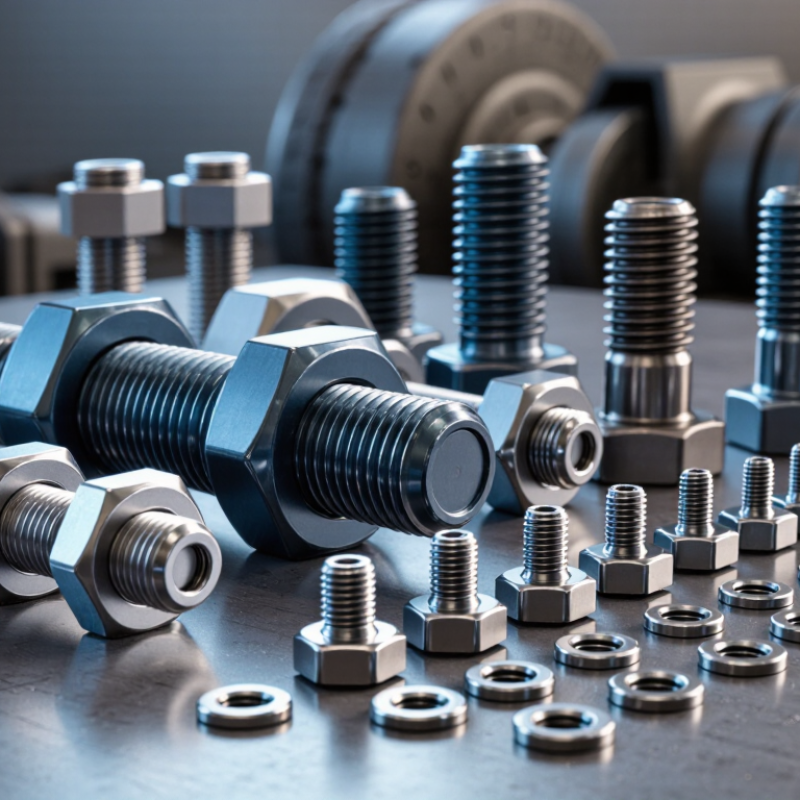
Who Are the Top Specialty Fasteners Manufacturers in China?

What Are Specialty Fasteners and Where Are They Used?

Specialty fasteners are engineered for a particular joint, material, or operating condition, rather than being interchangeable off-the-shelf screws or bolts. They may have unusual head shapes, captive designs, locking features, or coatings that resist corrosion and heat. Examples include shoulder bolts for precise alignment, clinch nuts for thin sheet metal, and blind rivets for joints accessible from one side. Small parts, demanding jobs.

They appear in aircraft structures, vehicle battery enclosures, rail equipment, medical devices, and factory machinery. A fastener in a battery enclosure, for example, must hold panels securely while tolerating vibration and temperature changes. Engineers check load, substrate thickness, installation access, and serviceability before choosing a design. Material compatibility matters too; mixed metals can corrode at the joint. Selection is not always straightforward.

Grand View Research’s Fasteners Market report valued the global market at about USD 90.6 billion in 2023 and projected continued growth through 2030. This broad estimate covers standard and specialty products, so it should not be read as specialty-fastener sales alone. Report categories also vary, which makes comparisons imperfect. In practice, drawings, material specifications, and test results are more useful than the label “specialty” by itself.

How China's Specialty Fastener Industry Is Organized

China’s specialty fastener industry is organized around production clusters, technical capabilities, and end-use requirements. Suppliers may focus on turned parts, cold-formed bolts, precision screws, or corrosion-resistant assemblies. Their workshops often differ more in equipment and process control than in product labels. A thread gauge, a heat-treatment record, and a sample part can reveal more than a broad claim of “custom manufacturing.”

Some manufacturers serve machinery and construction customers, while others handle smaller, tightly specified components for electronics or transport equipment. The distinction is practical. A supplier making large structural bolts needs different forming, testing, and inspection routines from one producing miniature precision parts. The details matter.

Buyers commonly compare drawing review, material traceability, dimensional inspection, and production consistency. Capabilities can vary by factory and by product line, so a company’s general profile does not confirm that every process happens in-house. Ask how samples are measured, how batches are identified, and what happens when dimensions drift. Simple questions help. Industry directories and trade fairs can help map potential suppliers, but they are only starting points. I would not treat a polished catalogue as proof of stable quality; sometimes the evidence is incomplete, and that deserves a second look.

Which Manufacturers Lead China's Specialty Fastener Market?

China’s specialty fastener market is led by manufacturers with strong process control, flexible engineering, and consistent quality checks. The most capable producers handle custom bolts, pins, threaded parts, and assemblies for demanding industrial uses. They can work from detailed drawings and explain how material choice, heat treatment, and coatings affect performance. A clean inspection bench matters. So does traceability. For buyers, leadership is less about factory size and more about whether a supplier can repeat a specification across batches.

Look for documented tensile and hardness testing, dimensional inspection, and clear records linking a shipment to its material batch. Ask how the factory manages nonstandard tolerances, surface finishes, and changes to a drawing. Practical evidence beats polished claims. A sample part should match its drawing, including thread pitch and coating thickness. Still, even a capable manufacturer may struggle with an unusual design or a rushed schedule; that deserves an honest conversation, not a sales promise. I would compare response quality as carefully as quoted price. A supplier that flags a possible assembly issue early may be more useful than one that simply says yes.

What Products and Capabilities Distinguish These Manufacturers?

China’s specialty fastener manufacturers are distinguished by process depth, not simply large catalogs. Their capabilities may include multi-station cold heading for consistent bolt shapes, CNC machining for unusual geometries, and thread rolling for uniform threads. Some also handle heat treatment and protective coatings in-house, reducing handoffs between suppliers. Small details matter: a clean thread start, smooth coating around the head, and consistent dimensions across a production batch.

Grand View Research valued the global industrial fasteners market at USD 90.89 billion in 2023 and forecast 4.5% annual growth through 2030. The scale raises expectations for dependable production and quality records. For steel bolts and screws, ISO 898-1 specifies mechanical property requirements. Capable manufacturers can support these requirements with tensile, hardness, and dimensional checks, plus batch-level material traceability. Not every supplier offers the same testing depth.

For custom parts, look for clear evidence: sample inspection reports, tooling plans, and stated tolerances. Ask how the factory controls heat-treatment variation and coating thickness. A polished catalog proves little. A caveat: adding a special coating or tighter tolerance may increase cost without improving service life. The right specification depends on load, environment, and assembly method.

Who Are the Top Specialty Fasteners Manufacturers in China? - What Products and Capabilities Distinguish These Manufacturers?

This table compares common specialty-fastener product categories and relevant manufacturing or verification capabilities. It is an industry-level reference, not a supplier ranking or a claim about any particular manufacturer.

Product category Representative products Relevant manufacturing capabilities Useful standards and verification
High-strength steel fasteners Bolts, screws, and studs in property classes such as 8.8, 10.9, and 12.9 Controlled steel selection, cold heading or forging, heat treatment, thread rolling, and mechanical-property testing ISO 898-1 covers mechanical properties of carbon- and alloy-steel bolts, screws, and studs; verify tensile strength, hardness, and dimensional conformity.
Stainless-steel fasteners Bolts, screws, nuts, and studs made from stainless-steel grades such as A2 and A4 Stainless wire processing, cold forming, thread production, passivation where specified, and grade or material identification ISO 3506 specifies mechanical properties for corrosion-resistant stainless-steel fasteners. Confirm the required material grade and test documentation.
Structural and heavy-duty bolts Hexagon bolts and assemblies for structural or heavy-duty applications Larger-size forming or forging, controlled heat treatment, dimensional inspection, and lot traceability Specify the applicable design and product standard for the project; ISO 898-1 may apply to the mechanical properties of carbon- and alloy-steel bolts.
Precision and socket fasteners Hexagon socket head cap screws and other precision screws Accurate head and drive forming, thread rolling or cutting, dimensional control, and inspection of drive features ISO 4762 specifies hexagon socket head cap screws. Check dimensions, material, property class, and tolerances against the purchase specification.
Coated corrosion-resistant fasteners Bolts, screws, and nuts with zinc-flake or electrodeposited coatings Coating-process control, coating-thickness checks, appearance inspection, and corrosion testing when specified ISO 10683 covers non-electrolytically applied zinc-flake coatings; ISO 4042 covers electrodeposited coatings on fasteners. Agree on coating type and performance requirements.
Application-specific and custom fasteners Special-length bolts, nonstandard head forms, custom threads, and made-to-drawing parts Drawing review, tooling and die development, prototype production, sample approval, and production-lot inspection Use an approved drawing and agreed inspection plan. ISO 16047 provides a method for testing torque/clamp-force relationships where applicable.

Standards are listed as relevant examples; the applicable requirements depend on the fastener design, material, coating, and end use. Confirm current editions and acceptance criteria with the purchaser and supplier.

How to Evaluate a Specialty Fastener Manufacturer in China?

Choosing among China’s specialty fastener manufacturers takes more than comparing prices or catalog sizes. Start with the fastener’s actual job: load, vibration, temperature, exposure to moisture, and available installation space. A supplier should explain how its proposed material and design fit those conditions. Ask which operations happen in-house, including forming, machining, heat treatment, and coating. Clear answers matter.

Request drawings, material certificates, inspection records, and sample parts from a comparable production run. Check critical dimensions with suitable measuring tools, and compare results against the drawing rather than relying on appearance. For corrosion-resistant parts, ask how coating thickness and adhesion are checked. Review how batches are identified and how nonconforming parts are handled. No checklist catches everything.

A factory visit, when practical, can reveal whether gauges are calibrated and work instructions are current. Ask operators how they prevent mix-ups between similar sizes or grades; their answers may expose gaps that a polished presentation hides. Discuss lead times using realistic order volumes, not only trial quantities. Communication is part of quality, too. If specifications change, confirm how revisions reach production and inspection staff. A capable manufacturer can show evidence, explain limitations, and respond consistently, though one audit cannot guarantee every future batch will be identical.

A Technical Check for Evaluating Specialty Fastener Manufacturers in China

Compare the nominal tensile strength indicated by selected ISO 898-1 property classes for carbon and alloy steel bolts, screws, and studs.

Use the required property class as one part of supplier evaluation: request material and test documentation, and confirm that samples meet the applicable specification. Values shown are nominal class-designation strengths, not guaranteed test results; requirements and minimum tensile strengths can vary by fastener size and standard edition.

Reference: ISO 898-1, mechanical properties of carbon and alloy steel fasteners.

FAQS

What are specialty fasteners?

They are engineered for a specific joint, material, or operating condition. Designs may include unusual heads, captive features, locks, or protective coatings. Small parts, demanding jobs.

Where are specialty fasteners commonly used?

They appear in aircraft structures, vehicle battery enclosures, rail equipment, medical devices, and factory machinery. Each application brings different loads and environmental conditions.

What are some common examples?

Shoulder bolts help with precise alignment. Clinch nuts suit thin sheet metal, while blind rivets work when only one side is accessible. Access matters.

How should buyers choose a fastener?

Check the load, substrate thickness, installation access, and service needs. Consider vibration, temperature, and material compatibility, since mixed metals may corrode at a joint.

What distinguishes manufacturers in China’s specialty fastener industry?

Suppliers may focus on turned parts, cold-formed bolts, precision screws, or corrosion-resistant assemblies. Equipment and process control can matter more than catalog labels. Not always obvious.

Which production capabilities can be useful?

Multi-station cold heading, CNC machining, and thread rolling support different shapes and consistent threads. Some factories also perform heat treatment and coating in-house, reducing supplier handoffs.

What evidence should buyers request from a supplier?

Ask for sample inspection reports, tooling plans, stated tolerances, batch identification, and material traceability. Check how samples are measured and how dimensional drift is handled. A catalog is not proof.

Do all manufacturers provide the same level of testing?

No. Testing depth varies. For steel bolts and screws, ISO 898-1 specifies mechanical property requirements. Ask whether tensile, hardness, and dimensional checks are documented for each batch.

Do broad fastener market estimates measure specialty products alone?

No. Estimates may include both standard and specialty products, so they should not be treated as specialty-fastener sales alone. Categories vary, making comparisons imperfect.

Do tighter tolerances or special coatings always improve service life?

Not necessarily. They may increase cost without extending service life. The right specification depends on the load, environment, and assembly method.

Conclusion

Specialty Fasteners are engineered components designed for demanding applications where standard screws, bolts, or nuts may not provide the required strength, precision, corrosion resistance, or performance. They are used across industries such as construction, transportation, energy, machinery, and electronics. China’s specialty fastener industry includes manufacturers with different levels of focus, from producers serving broad industrial markets to companies specializing in custom, high-performance components.

Leading manufacturers are distinguished by their product range, material options, engineering support, production controls, and ability to meet precise specifications. When evaluating a supplier, buyers should consider manufacturing expertise, quality assurance processes, testing capabilities, production capacity, customization options, and communication throughout the project. A careful comparison of these factors can help identify a reliable partner whose products and services match the application’s technical requirements and delivery expectations.


Liam

Liam

Liam is a dedicated marketing professional with a profound expertise in the industry, where he excels at highlighting the unique advantages of our core products. With a keen understanding of market trends and consumer needs, Liam frequently updates our company’s professional blog, providing......