Sourcing Custom Metal Fasteners globally is not simply a search for the lowest quotation. It is a technical process involving drawings, alloys, tooling, coatings, tolerances, and supplier discipline. A stainless steel shoulder screw may look simple on paper. Yet a small tolerance error can cause assembly failure, thread damage, or costly production delays.
Michael J. Stone, a veteran fastener sourcing consultant, offers a practical reminder: “The cheapest fastener is rarely the lowest-cost fastener.” His point deserves attention. Price matters, but material certificates, sample approval, process control, and packaging often decide the real cost. A reliable supplier should explain how each batch is inspected. Ask for dimensional reports, hardness results, coating details, and traceability records.
Global sourcing also requires patience. A factory may produce excellent prototypes but struggle with repeat production. Another supplier may communicate well but lack suitable cold-heading equipment. These differences become visible during audits, pilot orders, and corrective-action reviews. Do not trust polished catalogs alone.
The process is not perfectly predictable. Freight disruptions happen. Tooling assumptions may be wrong. Even experienced buyers overlook a critical thread specification. That is why a clear technical package matters. It should include drawings, standards, inspection points, packaging requirements, and acceptable deviations.
This guide explains how to evaluate manufacturers, compare quotations, manage samples, and reduce quality risks. It also examines communication, lead times, compliance documentation, and long-term supplier performance. Good sourcing is not about finding one perfect factory. It is about building a controlled, verifiable process for dependable Custom Metal Fasteners.
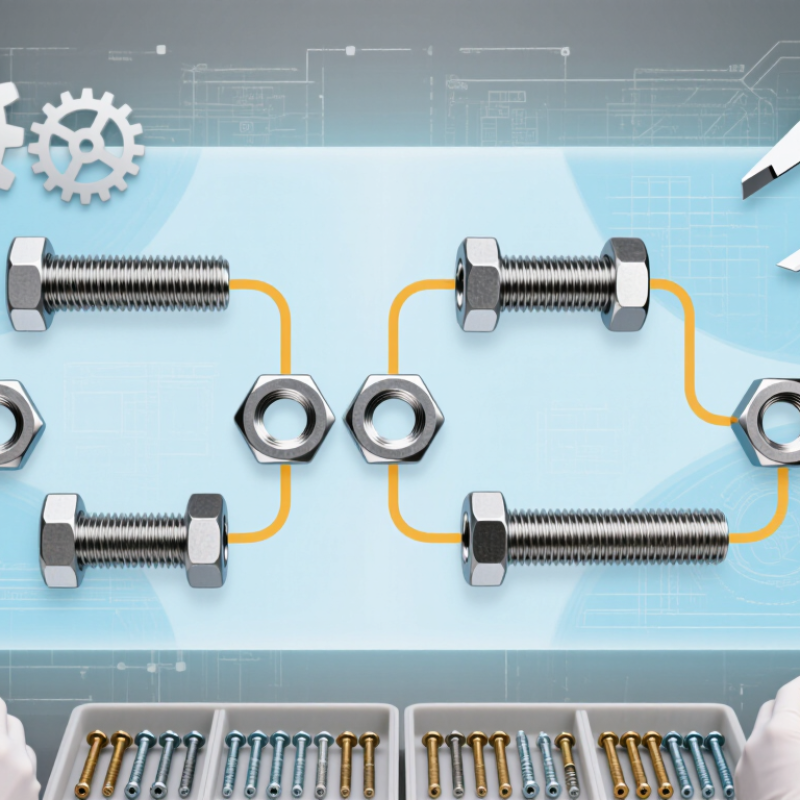
Define Fastener Requirements and Global Sourcing Criteria
How to Source Custom Metal Fasteners Globally?
Custom fasteners should begin with a written requirement, not a supplier search. Define the thread type, diameter, length, tolerance, head geometry, and required quantity. State the base metal, hardness range, surface treatment, and corrosion environment. A fastener used near saltwater needs different protection from one installed indoors. Attach a simple drawing with datum points and critical dimensions. Mention the inspection method for each critical feature. This prevents vague quotations. Also define packaging, labeling, delivery terms, and documentation before requesting prices.
For global sourcing, compare suppliers against measurable criteria. Review machining capacity, heat-treatment controls, inspection equipment, export experience, and production lead time. Ask for material certificates, dimensional reports, and sample approval records. A factory visit is useful, but it cannot replace independent sample testing. Check thread gauges, coating thickness, torque performance, and batch traceability. Confirm origin data and import requirements with qualified trade specialists.
I have learned that the cheapest quote often hides weak packaging or inconsistent tolerances. That lesson remains uncomfortable.
Build a second-source plan, but do not approve it without matching samples and inspection standards. No shortcut works.
Identify Qualified International Metal Fastener Suppliers
Qualified international metal fastener suppliers should be assessed beyond price and catalog size. Grand View Research estimated the global industrial fasteners market at approximately USD 88 billion in 2023. That scale creates many sourcing options, but also inconsistent quality. Ask for material certificates, dimensional inspection records, heat-treatment data, and coating specifications. Confirm whether documents match the exact production lot.
ISO 9001 is useful, but it is not enough. The ISO Survey 2023 reported 1,265,216 valid ISO 9001 certificates across 189 countries and economies. A certificate shows a quality system exists. It does not prove every custom bolt meets your drawing. Request recent sample parts, tensile results, hardness readings, and salt-spray test conditions. Check thread gauges physically. Small details matter.
Audit the supplier’s tooling, inspection equipment, and subcontractor controls. Review traceability from steel coil or bar stock to packed cartons. For complex parts, require a first-article inspection and a controlled approval process before mass production. International Trade Centre Trade Map data under HS 7318 can help compare exporting countries and supplier trade activity, but classification data is broad. It cannot verify factory capability.
Use video audits carefully. Ask operators to show live measurements, not prepared slides. Pricing should include tooling, packaging, testing, and shipping assumptions. A low quotation may hide weak inspection. I have learned that even experienced buyers can overtrust polished documents. Recheck critical evidence independently. Supplier qualification is never perfectly finished.
Compare Materials, Manufacturing Methods, and Quality Standards
How to Source Custom Metal Fasteners Globally?
Material selection controls strength, corrosion resistance, weight, and total cost. Carbon steel suits heavy loads and controlled environments. Stainless steel performs better near moisture, salt, and cleaning chemicals. Brass offers conductivity and attractive corrosion resistance. Titanium reduces weight but usually increases machining costs. Do not choose by price alone. A fastener used outdoors may need a protective coating, while a clean-processing area may reject certain coatings.
Manufacturing methods also affect performance. Cold heading suits high-volume bolts and screws with consistent shapes. CNC machining supports unusual geometry, tighter tolerances, and smaller batches. Thread rolling usually creates stronger threads than cutting because it preserves the metal grain. Forging handles demanding loads, but tooling costs can surprise smaller projects. Ask for process samples, not only finished photographs. Small details matter, such as thread runout, burrs, and washer seating.
Quality requirements should be written before supplier comparison. Specify dimensions, thread gauge limits, hardness, tensile strength, surface finish, and coating thickness. Request material certificates and lot traceability. Standards such as ISO 9001, ASTM, and DIN can structure inspections, but certificates alone prove little. Inspectors should check samples with calibrated gauges and record results. Salt-spray testing may reveal coating weaknesses, though it cannot represent every service environment. A polished report is not proof. One practical mistake is accepting a supplier’s standard tolerance without checking the assembly. That shortcut can create loose joints, damaged threads, or costly rework. Ask for an inspection plan, sample approval, and clear handling of nonconforming parts.
How to Source Custom Metal Fasteners Globally?
Compare materials, manufacturing methods, and quality standards using representative fastener material requirements.
Material Selection
Carbon steel class 8.8 provides high strength for general industrial use. A2-70 and A4-70 stainless steel offer strong corrosion resistance, while Grade 5 titanium combines high strength with low density.
Manufacturing Methods
Cold heading is efficient for high-volume standard parts. Hot forging suits larger or complex fasteners. CNC machining supports prototypes and tight custom geometries, while thread rolling improves thread fatigue performance.
Quality Standards
Common references include ISO 898-1 for carbon-steel mechanical properties, ISO 3506 for stainless-steel fasteners, ASTM F593 for corrosion-resistant bolts, and ASTM F136 for titanium alloy material.
Chart values show representative minimum or specified ultimate tensile strengths in MPa: carbon steel class 8.8, stainless steel A2-70 and A4-70, and Grade 5 titanium.
Verify Samples, Certifications, Pricing, and Production Capacity
How to Source Custom Metal Fasteners Globally?
Sourcing custom metal fasteners globally starts with a controlled sample review. Request production samples, not only polished prototypes. Measure thread pitch, head diameter, coating thickness, and hardness against approved drawings. Check fit inside the actual assembly. A fastener can pass visual inspection and still fail during torque testing. Keep signed sample records with photos, dimensions, and revision numbers.
Certification documents deserve careful attention. Ask for material certificates, inspection reports, and coating test results. Confirm that each document matches the supplied grade, batch, and manufacturing site. Certificates should also suit the destination market and intended application. Missing traceability is a warning sign. I once accepted a supplier’s general report too quickly, then found it did not cover the ordered alloy. That mistake delayed approval.
Pricing should show tooling, unit cost, testing, packaging, freight terms, and possible surcharges. Compare complete landed costs, not isolated unit prices. A low quote may hide expensive tooling or unstable plating quality. Ask for production capacity using evidence, such as monthly output, machine lists, staffing, and recent lead-time records. Review how the supplier handles peak orders and rejected batches. Capacity claims can sound impressive. A short pilot order reveals more. Monitor defect rates, delivery accuracy, and communication during that run. Keep a written change-control process, because even a small thread revision can affect tooling, certification, and final cost.
Manage Orders, Shipping, Customs, and Supplier Performance
How to Source Custom Metal Fasteners Globally?
Global sourcing starts with a precise order package. Include drawings, thread dimensions, material grade, coating, tolerances, quantities, and inspection requirements. A purchase order should also state revision numbers and approved samples. Small changes can create expensive production errors.
Manage shipping before production finishes. Confirm carton dimensions, gross weight, delivery terms, insurance, and the responsible customs broker. Check the correct tariff classification with qualified customs professionals. Prepare commercial invoices, packing lists, origin documents, and material certificates early. Never rely on assumptions about duties or import rules. They can change.
Tips: Use a shared order tracker. Record promised dates, inspection results, shipment milestones, and document status. Ask suppliers for weekly updates, but verify critical claims with inspection evidence. Measure on-time delivery, defect rates, response speed, and corrective-action quality. A supplier may offer a low price yet create delays through unclear communication. I have seen buyers ignore small drawing revisions, then blame the factory for producing the wrong part. That approach is unfair and costly. A better process includes written approval before production and random checks before dispatch. Keep backup suppliers for critical fasteners, but do not switch without reviewing capability, compliance records, and sample quality. Performance data should guide decisions, not personal impressions.
How to Source Custom Metal Fasteners Globally? - Manage Orders, Shipping, Customs, and Supplier Performance
Global sourcing dashboard for custom bolts, screws, nuts, washers, and threaded components
| Order ID |
Sourcing Region |
Custom Fastener Scope |
Material / Grade |
Order Quantity |
Production Lead Time |
Transit Time |
Trade Term |
Customs Control |
On-Time Delivery |
Incoming Defect Rate |
| MO-2601 |
East Asia |
Cold-headed flange bolts with prevailing-torque nuts |
Carbon steel, Class 10.9; zinc-flake coating |
80,000 pcs |
28–35 days |
18–24 days by sea |
FOB |
Commercial invoice, packing list, bill of lading, material certificate, HS classification |
96% |
0.7% |
| MO-2602 |
South Asia |
Heavy-hex structural bolts and hardened washers |
Carbon steel, ASTM A325-equivalent specification; hot-dip galvanized |
35,000 sets |
35–45 days |
25–32 days by sea |
CIF |
Mill test certificate, coating thickness report, fumigation statement where required |
91% |
1.4% |
| MO-2603 |
Central Europe |
Precision shoulder screws for automated equipment |
Stainless steel, A2-70; passivated |
12,000 pcs |
21–28 days |
3–7 days by road |
DAP |
Origin declaration, inspection report, dimensional measurement record |
97% |
0.4% |
| MO-2604 |
North America |
Custom U-bolts with formed legs and saddle plates |
High-strength carbon steel; electro-galvanized |
18,000 sets |
24–32 days |
5–9 days by truck |
FCA |
Commercial invoice, packing list, preferential-origin documents where applicable |
95% |
0.8% |
| MO-2605 |
Southeast Asia |
Small-diameter machine screws and captive washers |
Stainless steel, A4-80; plain finish |
150,000 pcs |
30–42 days |
12–19 days by sea |
FOB |
Material certificate, RoHS/REACH declaration, carton and pallet count verification |
94% |
1.0% |
| MO-2606 |
Eastern Europe |
Turned brass inserts and knurled threaded bushings |
Free-cutting brass; nickel-plated surface |
25,000 pcs |
20–30 days |
6–10 days by road |
FCA |
Dimensional report, plating certificate, chemical composition record |
93% |
0.6% |
| MO-2607 |
East Asia |
High-strength socket-head cap screws |
Alloy steel, Class 12.9; black oxide |
60,000 pcs |
25–35 days |
4–7 days by air freight |
FCA |
Heat-treatment certificate, hardness results, tensile test, export packing list |
98% |
0.3% |
| MO-2608 |
Western Europe |
Low-volume prototype screws and special thread forms |
Stainless steel, A4-80; electropolished |
2,500 pcs |
14–21 days |
2–5 days by parcel or road |
DDP |
Full traceability, inspection report, product drawing revision control |
99% |
0.2% |
Planning note: Lead times, transit times, duty exposure, and supplier-performance results are representative procurement benchmarks for global custom-metal-fastener programs. Actual customs treatment depends on the importing country, product composition, declared HS code, origin, trade agreement eligibility, and current regulations. Confirm classification, documentation, and landed cost before placing each order.
FAQS
Request production samples, not only polished prototypes. Measure thread pitch, head diameter, coating thickness, and hardness. Test the fastener inside the actual assembly. Appearance alone can mislead.
Keep photos, dimensions, revision numbers, and approval signatures together. These records clarify which sample production must follow. A missing revision can cause expensive errors.
Ask for material certificates, inspection reports, and coating test results. Match each document to the supplied grade, batch, and manufacturing site. Confirm suitability for the destination market and application.
Missing traceability is a serious warning sign. A general report may not cover the ordered alloy. I once trusted broad paperwork too quickly. Approval was delayed.
Compare complete landed costs, including tooling, unit price, testing, packaging, freight, and surcharges. A low unit price may hide expensive tooling. Plating problems can also raise later costs.
Request monthly output, machine lists, staffing details, and recent lead-time records. Review peak-order handling and rejected-batch procedures. A short pilot order reveals more. Track defects and delivery accuracy.
Include drawings, thread dimensions, material grade, coating, tolerances, quantities, and inspection requirements. Add revision numbers and approved samples. Small drawing changes can create large production mistakes.
Confirm carton dimensions, gross weight, delivery terms, insurance, and broker responsibility early. Prepare invoices, packing lists, origin documents, and material certificates before dispatch. Check tariff classification with qualified customs professionals. Rules can change.
Use an order tracker for promised dates, inspections, shipment milestones, and document status. Measure on-time delivery, defect rates, response speed, and corrective-action quality. Personal impressions are not enough.
Keep backup suppliers for critical fasteners. Review their capability, compliance records, and sample quality before switching. A rushed replacement may create new problems. Planning helps, but it is never perfect.
Conclusion
Sourcing Custom Metal Fasteners globally begins with clearly defining technical requirements, including dimensions, thread specifications, material grades, surface treatments, load performance, tolerances, and intended applications. Buyers should also establish sourcing criteria such as minimum order quantities, target costs, lead times, communication standards, and acceptable production regions. The next step is to identify qualified international suppliers by reviewing their manufacturing capabilities, experience, quality systems, equipment, and ability to produce consistent parts at the required scale.
A reliable sourcing process should compare materials, forming and machining methods, finishing options, inspection procedures, and applicable quality standards. Before placing a large order, request samples and verify certifications, test reports, pricing, tooling costs, production capacity, and delivery schedules. Once a supplier is selected, carefully manage purchase orders, packaging, freight, customs documentation, and delivery tracking. Regular performance reviews covering quality, responsiveness, on-time shipment, and corrective actions can help build a stable supply chain and reduce long-term sourcing risks.

