+86 131 7840 7856 WhatsApp Dongguan · Shaoguan · Wuhan, China

How to Choose Cold Headed Fasteners?

Time:2026-11-03 Author:Sophia
0%

Choosing Cold Headed Fasteners is not simply a matter of matching a diameter to a hole. The right option depends on the joint’s load, vibration, temperature, corrosion exposure, and assembly method. A bolt used in a steel frame may need different properties from a screw installed in a thin aluminum panel. Small details matter.

Start with the fastener’s function and the materials it will join. Compare dimensions, thread form, head style, strength class, and required clamping force. Cold heading shapes metal under pressure and can produce consistent parts efficiently, but material grade and forming quality still affect performance. Check drawings and specifications rather than relying on appearance alone. A bright finish does not prove corrosion resistance. For outdoor or damp service, assess the base material, coating, and possible interaction with connected metals.

Production conditions deserve equal attention. Consider installation access, available tooling, target quantity, inspection needs, and whether the design allows a standard size. A fastener that performs well in a test piece may behave differently when operators use another driver or torque setting. That deserves a second look. This guide explains how to weigh these factors, ask suppliers useful questions, and verify fit before full production. No single specification suits every application. When loads, safety margins, or environmental conditions remain unclear, consult a qualified engineer and validate the joint through testing. The aim is a dependable choice, not simply the cheapest part on paper.
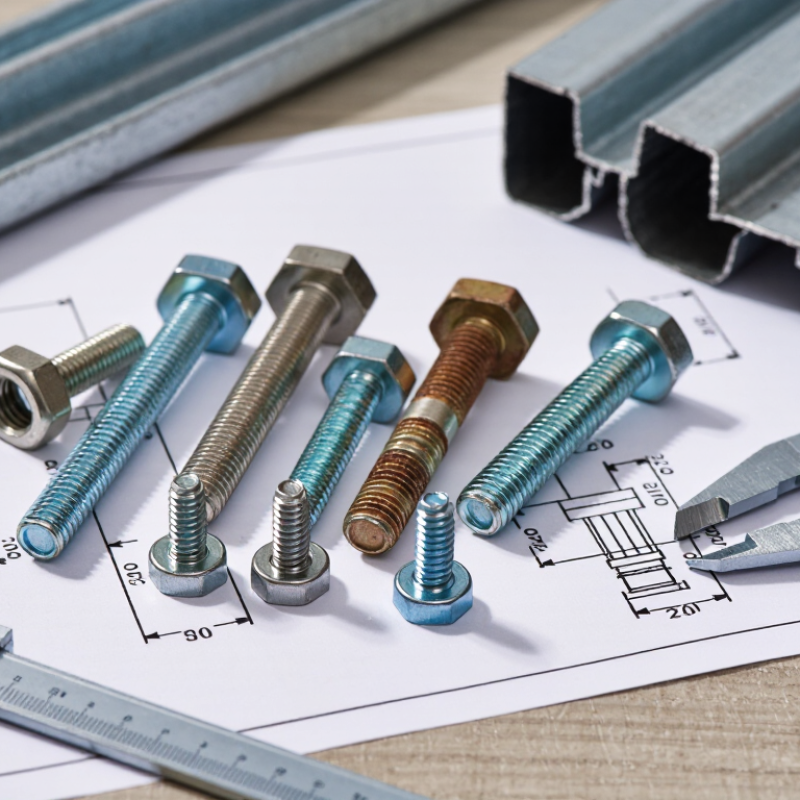
How to Choose Cold Headed Fasteners?

Define the Application Requirements for Cold Headed Fasteners

Cold headed fasteners should be specified around the job they must perform, not just their shape. Start with the load: note tension, shear, vibration, and any impact during installation or service. Then record the joint materials, operating temperature, moisture, chemicals, and expected service life. A bolt holding a vibrating machine cover faces different risks from one inside a dry cabinet. Small details matter. Include grip length, thread engagement, clearance, tool access, and allowable head dimensions. A fastener that fits the drawing may still be difficult to install on the production line.

Set strength targets using a recognized specification, then confirm they suit the complete joint. ISO 898-1 defines property class 8.8 with a nominal tensile strength of 800 MPa and a nominal yield-to-tensile ratio of 0.8. These figures help compare steel fasteners, but they do not replace joint calculations or testing. Specify coating and corrosion needs too; coatings can affect dimensions and, in some assemblies, tightening behavior. Ask the supplier to confirm material, heat treatment, dimensions, and inspection records against the drawing.

One caveat: early requirements are often incomplete. Revisit them after prototype installation, especially if tools, coatings, or mating materials change.

Identify Suitable Materials and Cold Heading Processes

How to Choose Cold Headed Fasteners?
Identify Suitable Materials and Cold Heading Processes

Choosing a cold-headed fastener starts with its load, environment, and geometry. Match the material to the job, not just the strength target. ISO 898-1 lists nominal tensile strengths of 800 MPa for property class 8.8 and 1,000 MPa for class 10.9. These values help screen carbon and alloy steels, but they do not replace checks for size, temperature, or fatigue. For corrosion resistance, stainless steel may fit; its stronger work-hardening behavior can demand careful wire condition and tooling. Small details matter.

Cold heading commonly forms a wire blank through upsetting, extrusion, or several staged operations. ASM Handbook, Volume 14A, explains how bulk-forming strain and die design affect material flow and forming loads. In practice, look for annealed wire with consistent diameter and surface quality; scale or a small seam can become a crack during heading. Use staged dies when a large head or long shank requires substantial metal movement. Then verify fill, cracks, and dimensions on trial parts. A neat material chart can still mislead. Actual trials may expose limits that calculations missed, so record tooling wear and reject patterns before production.

Choosing Cold-Headed Fasteners: Strength Class Guide

Compare the nominal tensile-strength levels associated with common ISO metric steel fastener property classes.

ISO property-class designations correspond to nominal tensile strengths of 400, 800, 1,000, and 1,200 MPa for classes 4.6, 8.8, 10.9, and 12.9, respectively. These are designation values, not guaranteed minimum test results. Choose material and class based on the applicable fastener standard, loads, corrosion exposure, and service temperature. Cold heading requires suitable wire condition and ductility; the process may include upsetting or extrusion, followed by thread rolling and, where specified, heat treatment.

Compare Fastener Types, Dimensions, and Mechanical Properties

How to Choose Cold Headed Fasteners?

Compare Fastener Types, Dimensions, and Mechanical Properties

Cold headed fasteners may look similar, but small differences affect fit and performance. Match the type to the joint: bolts pair with nuts, while screws engage directly with tapped holes. Studs can provide threaded engagement at both ends. Check the drawing for thread diameter, pitch, length, head shape, and drive style. A few millimeters can change seating or thread engagement.

Tips: Measure the mating parts, not just the old fastener. Confirm thread pitch with a gauge, and check whether length is measured from beneath the head. Keep a sample nearby. It helps, but it is not a substitute for specifications.

Compare mechanical properties against the load and service conditions. Tensile strength matters when a fastener is pulled; shear strength matters when parts slide across the joint. Hardness can indicate resistance to indentation, but it does not tell the whole story. Review material and coating details, especially where moisture or heat is present. Use test reports or supplier specifications to verify values. Avoid choosing the strongest option by default: excessive strength may add cost or complicate installation. I would also recheck the assumed load; it is easy to underestimate vibration or uneven contact.

Assess Environmental Conditions and Required Performance

Cold Headed Fasteners: Assess Environmental Conditions and Required Performance

Start with the actual exposure, not just the site’s general climate. Coastal spray, de-icing salts, cleaning chemicals, and trapped moisture can attack fasteners differently. A screw beneath a wet insulation layer may stay damp long after nearby surfaces dry. Use ISO 9223 atmospheric corrosivity categories as a guide, then consider local conditions that the category may miss. Choose materials and coatings for the full environment, including contact with dissimilar metals.

Tips: Check for standing water, chemical residue, and metal-to-metal contact. These small details matter.

Next, define the required performance: tensile and shear loads, vibration, operating temperature, and expected service life. The NACE IMPACT study estimated corrosion costs at US$2.5 trillion annually, or 3.4% of global GDP; it also reported that corrosion-control practices could save 15–35% of those costs. That estimate makes a practical point: corrosion resistance is part of reliability, not just appearance. Match fastener strength to the joint design, and verify coating thickness and material compatibility with supplier test data. High-strength, plated parts may need special consideration because manufacturing and service conditions can affect performance. Testing is useful, but it cannot perfectly reproduce every installation. Keep that limitation in mind.

Verify Quality Standards, Testing, and Supplier Capabilities

How to Choose Cold Headed Fasteners?
Verify Quality Standards, Testing, and Supplier Capabilities

A polished sample proves little. Ask for material certificates, lot-level traceability, and test records linked to the exact production batch. ASTM F606/F606M covers mechanical testing of externally and internally threaded fasteners; ISO 898-1 specifies mechanical properties for carbon and alloy steel bolts, screws, and studs. Match the standard and property class to the drawing, service load, and environment. For a critical joint, check tensile strength, hardness, and proof load—not just dimensions. Small defects matter.

Supplier capability is part of product quality. Review process controls for wire preparation, heading, heat treatment, and coating. Ask how gauges are calibrated, how nonconforming parts are contained, and whether test results can be retrieved by lot number. For coated parts, request evidence that the finish meets the specification and that relevant risks were assessed. Grand View Research estimated the global industrial fasteners market at USD 90.8 billion in 2023, underscoring the scale of this supply chain; market size, however, does not verify any supplier’s quality. A production audit or sample-run review can reveal gaps a certificate misses. One caveat: paperwork may look complete while records fail to match the delivered lot. Check the details.

FAQS

What information should I gather before choosing a cold-headed fastener?

Record tension, shear, vibration, and installation impact. Note joint materials, temperature, moisture, chemicals, and expected service life. Small details matter.

Which fit details can affect installation?

Check grip length, thread engagement, clearance, head dimensions, and tool access. A fastener may match the drawing but still resist assembly.

How should I set strength requirements?

Use a recognized specification, then check the complete joint. Property class 8.8 has nominal tensile strength of 800 MPa; class 10.9 has 1,000 MPa. These values do not replace joint calculations or testing.

How do I choose a fastener material?

Match material to the load and environment. Stainless steel may suit corrosion concerns, but its work-hardening behavior can require careful wire selection and tooling. Not always simple.

What should I check about the cold-heading process?

Look for consistent wire diameter and surface quality. Scale or a small seam may become a crack during heading. Staged dies can help form large heads or long shanks.

How can trial parts reveal process problems?

Inspect fill, cracks, and dimensions. Record tooling wear and rejection patterns. A tidy material chart can still miss what actual trials reveal.

Which quality records should I request?

Ask for material certificates, lot traceability, and test records linked to the production batch. Check tensile strength, hardness, proof load, and dimensions as needed.

How should I assess a supplier’s process controls?

Review wire preparation, heading, heat treatment, coating, and gauge calibration. Ask how nonconforming parts are contained and whether records match the delivered lot. Paperwork alone is not proof.

What should I reconsider after prototype installation?

Revisit requirements if tools, coatings, or mating materials change. Coatings can affect dimensions and tightening behavior. Early specifications are often incomplete.

Conclusion

Choosing Cold Headed Fasteners begins with a clear understanding of the application: the loads they must carry, how they will be installed, and the level of reliability required. Next, consider suitable materials and cold heading processes, since these choices influence strength, durability, manufacturability, and cost. Compare fastener types, dimensions, and mechanical properties to ensure the selected design fits the assembly and performs as intended.

Environmental conditions also matter. Exposure to moisture, heat, vibration, or chemicals can affect material and finish requirements, so account for these factors when defining performance needs. Before making a final selection, review applicable quality standards, testing methods, and inspection requirements. Evaluate suppliers for their technical capabilities, process controls, and ability to provide consistent products. A structured assessment helps balance performance, production needs, and long-term reliability.


Sophia

Sophia

Sophia is a dedicated marketing professional with an exceptional depth of knowledge about her company's products and services. With a keen understanding of market trends and customer needs, she crafts insightful blog posts that not only inform but also engage readers, enriching the company’s online......