Choosing reliable Automotive Fastener Suppliers is not a simple ranking exercise. A bolt may look ordinary, yet it can secure a brake assembly, seat frame, or battery enclosure. Small differences in thread accuracy, coating thickness, and heat treatment can affect assembly quality. This guide introduces ten influential Chinese suppliers serving automotive manufacturers and tier-one customers. It considers production capability, quality systems, export experience, and application knowledge. More importantly, it asks how suppliers perform under real purchasing pressure.
The assessment focuses on evidence rather than polished company descriptions. Relevant signals include IATF 16949 certification, laboratory controls, PPAP support, traceability, and stable delivery records. We also consider whether a supplier can provide drawings, material reports, salt-spray data, and consistent torque performance. A factory with modern presses is not automatically a dependable partner. Tooling maintenance, inspection discipline, packaging, and corrective-action speed matter too. These details often decide whether a shipment reaches a production line smoothly.
China’s fastener market is broad, competitive, and uneven. Some companies excel at standard screws, while others handle cold-heading parts, high-strength bolts, or custom assemblies. No list remains perfect for every vehicle program. Buyer requirements change by region, platform, volume, and compliance obligation. Therefore, this overview should support due diligence, not replace it. Request current certificates, sample lots, audit access, and clearly defined acceptance criteria before signing a contract. The ranking may invite debate. That is useful. Careful comparison usually reveals the best fit.
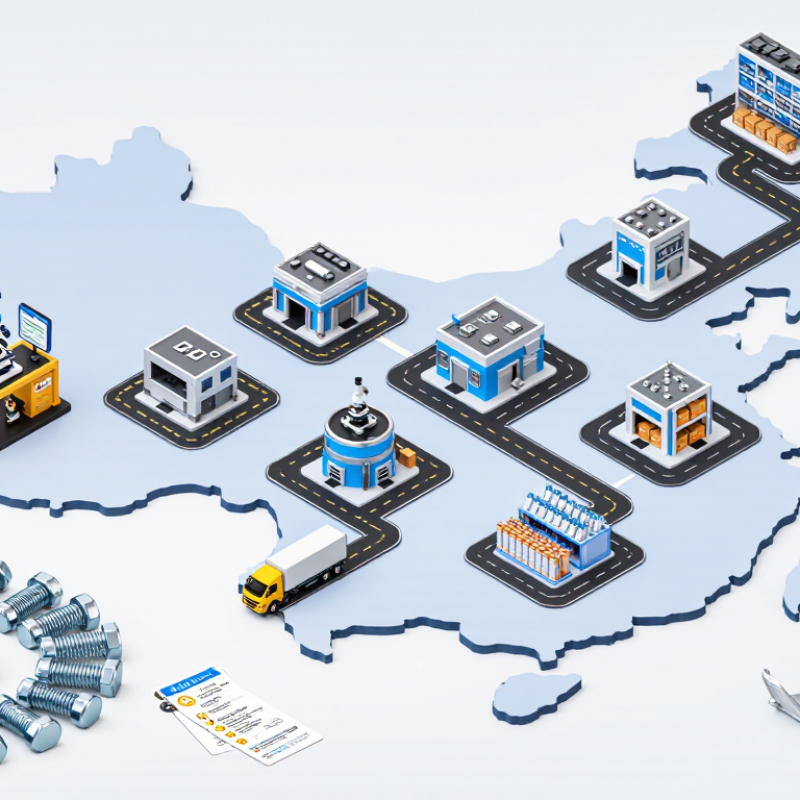
Automotive fasteners are small mechanical components that hold large systems together. They include bolts, screws, studs, nuts, clips, and threaded inserts. A wheel bolt, for example, must maintain clamping force during braking, cornering, and road vibration. Correct torque matters because loose joints can move, while excessive torque may stretch or damage the fastener.
The scale is substantial. The International Organization of Motor Vehicle Manufacturers reported about 93.5 million vehicles produced worldwide in 2023. Each vehicle contains thousands of fastening points. The International Energy Agency also recorded nearly 14 million electric car sales in 2023. Electric vehicles bring different demands, including battery enclosure sealing, electrical grounding, and lightweight structural design. Materials and coatings must resist corrosion without creating harmful electrical contact problems. Small parts. Serious responsibilities.
In practical quality control, engineers check thread accuracy, tensile strength, coating thickness, torque-preload performance, and resistance to vibration. ISO 898-1 provides mechanical property requirements for many carbon-steel fasteners, while joint design still depends on temperature, material pairing, and service loads. Automotive fasteners are not automatically safe because they look identical. That assumption deserves criticism. A supplier may meet a drawing yet fail in real assembly if lubrication, tool calibration, or surface treatment changes. Reliable production therefore requires traceability, controlled testing, and documented inspection results from raw material to final installation.
| No. | Automotive Fastener Category | Typical Materials | Common Automotive Applications | Relevant Technical Requirements | Why It Is Important | Key Supplier Evaluation Criteria |
|---|---|---|---|---|---|---|
| 1 | Hexagon Head Bolts | Carbon steel, alloy steel, stainless steel | Engine mounts, chassis, suspension, steering and powertrain assemblies | Strength classes under ISO 898-1; dimensional control; torque-tension consistency | Provides high clamping force and secure load transfer between components | Cold or hot forming capability, heat-treatment control, thread accuracy and traceability |
| 2 | Flange Bolts | Medium-carbon steel, alloy steel, stainless steel | Subframes, brake systems, transmission housings and body structures | Integrated flange geometry; bearing-surface flatness; controlled hardness and coating thickness | The integrated flange distributes load and can reduce the need for separate washers | Flange concentricity, dimensional repeatability, corrosion protection and sorting systems |
| 3 | Self-Tapping Screws | Case-hardened carbon steel, stainless steel | Interior trim, plastic components, brackets and thin sheet-metal panels | Thread-forming performance; drive compatibility; resistance to stripping and cracking | Enables efficient assembly where a pre-tapped nut or hole is not practical | Point geometry, thread profile, insertion torque, pull-out performance and surface finish |
| 4 | Weld Nuts | Low-carbon steel, stainless steel | Body-in-white structures, seat frames, instrument panels and enclosed sections | Weldability; thread integrity after welding; positional accuracy; resistance to weld spatter | Creates a permanent internal thread in locations that are difficult to access during assembly | Weld projection consistency, nut alignment, post-weld gauge testing and dimensional inspection |
| 5 | Prevailing-Torque Nuts | Carbon steel, alloy steel, stainless steel with polymer or deformed-thread locking features | Suspension, exhaust systems, engine accessories and vibration-prone joints | Prevailing torque and reuse requirements under ISO 2320; thread and temperature compatibility | Helps prevent loosening caused by vibration, thermal cycling and dynamic loads | Locking performance, temperature resistance, torque retention and batch consistency |
| 6 | Stamped and Flat Washers | Carbon steel, stainless steel, spring steel | Bolted joints in body, chassis, seats and electrical assemblies | Outside diameter, thickness, hardness, flatness and burr control | Distributes clamping load and protects mating surfaces from damage or embedment | Dimensional stability, edge quality, material certification and corrosion resistance |
| 7 | Rivets and Blind Rivets | Aluminum alloys, steel, stainless steel | Body panels, heat shields, trim and assemblies with one-sided access | Shear and tensile strength; grip-range accuracy; mandrel retention and hole compatibility | Provides fast, reliable joining where access to the rear side is limited | Installation force, joint strength, sealing performance and automated feeding capability |
| 8 | Threaded Inserts | Steel, stainless steel, brass and aluminum | Plastic instrument panels, battery housings, composite parts and lightweight structures | Pull-out resistance, spin-out resistance, installation depth and material compatibility | Strengthens threaded connections in plastics, composites and thin materials | Insert retention, installation process capability, dimensional accuracy and corrosion control |
| 9 | High-Strength Structural Fasteners | Heat-treated alloy steel | Chassis joints, crash-management structures, suspension and safety-critical systems | High tensile and fatigue strength; controlled hardness; validated torque-angle or torque-tension behavior | Maintains joint integrity under high loads, impact forces and repeated vibration | Metallurgical control, laboratory validation, process audits and complete lot traceability |
| 10 | Corrosion-Resistant Fasteners | Stainless steel, zinc-coated steel, zinc-flake-coated steel | Underbody components, battery systems, engine compartments and exterior assemblies | Coating adhesion, salt-spray performance, galvanic compatibility and dimensional impact of coating | Extends service life and helps preserve clamping performance in moisture and road-salt environments | Coating process control, environmental compliance, corrosion test results and packaging quality |
Automotive fasteners are small parts that join vehicle components. They include bolts, screws, studs, nuts, clips, and threaded inserts. Small parts. Serious responsibilities.
Correct torque creates the required clamping force. Loose joints may move during braking or vibration. Excessive torque can stretch or damage the fastener. Torque tools need regular calibration.
Electric vehicles require secure battery enclosures and reliable electrical grounding. They also need lightweight structural solutions. Materials must resist corrosion and avoid harmful electrical contact problems. The design details are easy to underestimate.
Engineers check thread accuracy, tensile strength, coating thickness, and vibration resistance. They also measure torque and preload performance. Hardness and salt-spray testing may support corrosion evaluation. One test is never enough.
Buyers should review production capability, inspection records, and engineering support. Factory visits can reveal labeled steel coils and calibrated gauges. Inspectors should record results beside each production batch. A polished brochure proves little.
Useful documents include material certificates and dimensional inspection reports. Heat-treatment records and traceable batch numbers are also important. Buyers should confirm each certificate’s scope. Documents can still contain gaps.
Suppliers may provide wheel studs, flange bolts, U-bolts, rivets, clips, and washers. They often produce custom parts from drawings or samples. Services may include cold heading, thread rolling, stamping, machining, and heat treatment. Tooling support can shorten development time.
Trial orders help buyers check fit, thread engagement, and installation force. Approval samples can expose missed drawing revisions before mass production. They also help verify coating thickness and surface condition. Small tests prevent larger surprises.
Automotive fasteners are essential components used to securely connect vehicle parts, including body panels, engines, chassis systems, interiors, and electrical assemblies. Their strength, precision, corrosion resistance, and ability to withstand vibration and temperature changes directly affect vehicle safety, durability, and manufacturing efficiency. This article explains how China’s leading Automotive Fastener Suppliers are evaluated according to product quality, production capabilities, technical expertise, certifications, delivery reliability, customization support, and customer service.
It also presents a practical overview of the top 10 suppliers without focusing on any individual brand. Their products and services may include bolts, nuts, screws, studs, clips, washers, customized components, surface treatments, quality testing, and supply-chain support for vehicle manufacturers and component producers. Finally, the article offers guidance for buyers on comparing material standards, dimensional accuracy, testing procedures, production capacity, communication, pricing, lead times, and after-sales support to select a dependable supplier for specific automotive applications.

